



Protective packaging keeps products secure inside custom boxes by absorbing impacts, limiting movement, and preventing surface damage. However, a sturdy box alone may not protect fragile or delicate products during shipping. Poorly fitted inserts, insufficient cushioning, or excess empty space can still cause damage and costly returns.
Choosing the right protective packaging requires more than selecting a material. We’ll explore different types, materials, and custom box designs, helping you find suitable solutions for your products, shipping conditions, and packaging needs.
What Is Protective Packaging and Why Is It Important?

Protective packaging refers to materials and structures that protect products from physical damage, movement, scratches, and environmental conditions during handling, storage, and shipping. It works alongside the outer packaging box to keep products secure and reduce the risk of damage before they reach customers.
A custom box provides the outer structure, but it may not offer enough protection on its own. Products can still move, collide with the box walls, or experience excessive pressure during transportation. Protective packaging helps address these risks through cushioning, internal support, surface protection, and secure product positioning.
- Reduce product damage and loss: Proper protection lowers the risk of breakage, dents, and other damage that can make products unsuitable for sale. This is especially important for fragile, delicate, or high-value products.
- Lower returns and replacement costs: Damaged deliveries often require refunds, replacements, extra shipping, and customer service support. Reducing these risks limits unnecessary expenses and delays in order fulfillment.
- Preserve product quality and presentation: Products should arrive in the same condition they left the factory. Protective packaging helps maintain delicate surfaces, decorative finishes, and product appearance, particularly for premium retail goods.
- Reduce damage during storage and distribution: Products often pass through warehouses, distribution centers, and multiple handling stages before delivery. Proper protection helps reduce damage from repeated handling, stacking, and movement throughout the supply chain.
- Protect custom boxes during bulk shipping: When you order empty custom boxes in bulk, proper packing helps protect them from stacking pressure, friction, and handling damage. Packaging protective materials reduces the risk of crushed corners, scratches, and deformation, so the boxes arrive ready for product packing or retail use.
- Protect brand reputation and customer trust: Customers expect their purchases to arrive intact and ready to use. Repeated damage can lead to complaints, negative reviews, and lost repeat orders, while consistent delivery quality helps maintain customer confidence.
What Are the Different Types of Protective Packaging?
Protective packaging comes in several forms, including protective wraps, void fill, cushioning pads, and custom inserts. Each type serves a different purpose, from preventing surface scratches to absorbing impacts and keeping products securely positioned inside a box. Understanding these differences helps you choose suitable protection without adding unnecessary materials.

Protective Wraps and Sleeves
Protective wraps and sleeves cover products to prevent scratches, scuffs, dust exposure, and direct contact with other surfaces. Common options include tissue paper, foam sleeves, bubble wrap, and protective films. They work especially well for products with delicate finishes, such as jewelry, glassware, and polished accessories.
Wraps offer flexible coverage for products of different shapes, while fitted sleeves provide more consistent protection during packing and handling. However, surface protection alone may not provide enough cushioning for fragile products. Additional support may be necessary when products face significant impacts during shipping.
Void Fill Packaging
Void fill packaging occupies empty spaces inside a box to limit product movement during transportation. Common options include crinkle paper, air pillows, packing peanuts, and crumpled kraft paper. These materials help prevent products from shifting or striking the box walls.
Void fill works particularly well for shipping boxes that contain lightweight products or items of varying sizes. However, filling empty space does not automatically provide adequate impact protection. Heavy or fragile products may require additional cushioning, and choosing a properly sized box can often reduce the amount of filler needed.
Cushioning Pads and Corner Protectors
Cushioning pads help absorb shocks and reduce the impact forces that reach products during handling and transportation. They commonly use foam, air-cellular materials, or specially formed paper cushioning. These solutions are useful for fragile products that need protection against sudden impacts.
Corner protectors focus on vulnerable edges and corners. Depending on their design, they can provide local cushioning, support, or separation from the outer box. The right cushioning thickness and placement depend on product weight, fragility, and expected handling conditions.
At Gentle Packing, we also use corner protectors when shipping custom boxes in bulk. For example, when we transport folding cartons flat, corner protection helps prevent bent edges, crushed corners, and handling damage to stacks of flat-packed boxes. This helps keep the packaging in good condition before assembly and use.
Custom Inserts, Trays, and Dividers
Custom inserts and trays hold products in designated positions inside packaging boxes. They can use die-cut paperboard, molded pulp, foam, or fabric-covered structures. Unlike loose fillers, these components follow the product’s dimensions and shape, providing a more consistent fit.
Dividers separate multiple items into individual compartments, reducing contact and collisions during handling. This makes them useful for bottle sets, cosmetic kits, and other multi-item packaging.
A fitted insert can improve product stability, but its protective performance also depends on the material and structure. For example, a rigid paperboard insert may hold a product securely, while a cushioning insert can also help absorb impacts. The final design should account for both product positioning and the protection required during transportation.
5 Types of Protective Packaging Materials
Protective packaging materials include paperboard, molded pulp, foam, soft fabrics, and plastic films. These materials serve different purposes, including cushioning, structural support, product separation, and surface protection. The table below summarizes their common forms and protective functions in custom packaging.
| Material | Common forms | Main protective function | Key limitations |
| Paper and Corrugated Cardboard | Kraft paper, E/B/C flute board, paperboard inserts | Wrapping, separation, structural support | Moisture sensitivity |
| Molded Pulp | Transfer-molded trays, thermoformed inserts | Product positioning, cushioning | Tooling costs, moisture sensitivity |
| Foam Materials | EVA, EPE, PU | Shock absorption, cushioning, secure fitting | Density and firmness affect performance |
| Fabric Linings | Velvet, microfiber, suede-like fabrics | Scratch protection, soft contact surfaces | Limited impact protection |
| Plastic Films and Flexible Sheets | PE, PP, PET films | Wrapping, surface and moisture protection | Limited cushioning without air pockets |
Paper and Corrugated Cardboard

Paper-based protective packaging commonly uses kraft paper, solid paperboard, and corrugated cardboard. Kraft paper works for wrapping and void fill, while solid paperboard can be die-cut into dividers and inserts for lightweight products. Corrugated cardboard provides additional cushioning and structural support through its fluted layer between flat linerboards.
Common corrugated flute profiles include E-flute (approximately 1.5 mm) for compact mailer boxes and fitted inserts, B-flute (approximately 3 mm) for partitions and protective pads, and C-flute (approximately 4 mm) for shipping cartons that need greater thickness and cushioning space. These dimensions are approximate, as actual board thickness varies by specification.
Corrugated partitions and folded supports help keep bottles, gift sets, and retail products separated and securely positioned. However, paper-based materials can lose strength when exposed to moisture, and their cushioning performance depends on the board grade, flute structure, and design. For responsible fiber sourcing, you can also consider materials certified by the Forest Stewardship Council, which identifies FSC 100%, FSC Mix, and FSC Recycled materials. FSC certification verifies fiber sourcing, not the recyclability of the finished packaging.
Molded Pulp

Molded pulp uses paper or other plant-based fibers to form protective trays and inserts that follow a product’s shape. Common fiber sources include recycled paper and bagasse. Molded cavities, ribs, and supporting walls hold products in position and help distribute pressure across selected contact areas.
Two common options are transfer-molded pulp and thermoformed molded pulp. Transfer-molded pulp typically has thicker walls and a more textured surface, making it suitable for bottle holders, electronics trays, and protective supports. Thermoformed pulp uses heated molds to create thinner walls, smoother surfaces, and more precise shapes.
However, its protective performance depends on wall thickness, cavity design, and fiber composition. Custom designs typically require dedicated molds, while moisture exposure can reduce strength. Delicate product surfaces may also need a soft lining to prevent scratches.
Foam Materials: EVA, EPE, and PU

Foam materials use cellular structures to provide cushioning, shock absorption, and product support. EVA, EPE, and PU foam differ in cell structure, firmness, and compression behavior, which affect their protective performance. Foam density, thickness, and available cushioning space also influence how well each material handles impact and pressure.
- EVA Foam: This relatively firm, resilient closed-cell foam maintains defined shapes and supports precise die-cut cavities. It provides stable product positioning and works well for custom inserts in premium packaging boxes.
- EPE Foam: This lightweight, closed-cell polyethylene foam offers flexible cushioning and impact absorption. Its low weight and compression properties make it suitable for protective pads, corner supports, and shipping protection for fragile products.
- PU Foam: Flexible polyurethane foam offers soft, compressible cushioning, commonly through an open-cell structure. Different grades provide varying levels of firmness and recovery, making it useful for soft padding and inserts that need to conform to product contours.
Fabric Linings and Soft Covering Materials

Fabric linings create soft contact surfaces that help reduce friction and protect delicate finishes from scratches. They commonly cover foam or paperboard inserts, combining surface protection with a refined appearance. The underlying insert provides structural support, while the fabric protects the product surface. Fabric selection also requires attention to lint shedding, color transfer, and abrasion resistance.
- Velvet: Its short, dense pile creates a soft texture and a smooth presentation surface. It commonly covers shaped inserts in jewelry and luxury packaging, where both surface protection and appearance matter.
- Microfiber and Suede-Like Fabrics: These materials offer smooth or brushed finishes with different textures and levels of softness. Their fiber structure and surface finish influence friction, abrasion behavior, and contact with delicate products.
- Flocked Surfaces: Flocking uses adhesive and short fibers to create a velvet-like finish directly on foam, paperboard, or other suitable substrates. It provides a soft decorative surface without adding significant structural cushioning.
Plastic Films and Flexible Sheets

Plastic films and flexible sheets provide surface protection, dust resistance, moisture barriers, and lightweight cushioning in protective packaging. Polyethylene (PE), polypropylene (PP), and polyethylene terephthalate (PET) are common materials, each with different flexibility, strength, and barrier properties. Their protective performance also depends on film thickness, puncture resistance, and sealing quality.
- Polyethylene (PE): LDPE and LLDPE offer good flexibility and heat-sealing properties. They are commonly used for protective sleeves, bubble wrap, and air cushions. Bubble structures provide cushioning, while sealed PE films help protect against dust and moisture.
- Polypropylene (PP): PP films, particularly BOPP, offer high transparency, stiffness, and good surface clarity. They work well for transparent protective sleeves and wraps that protect products from dust and direct surface contact.
- Polyethylene Terephthalate (PET): PET films provide dimensional stability, tensile strength, and good abrasion resistance in suitable grades. They are useful for protective sheets and surface films where the material needs to maintain its shape and resist tearing during handling.
Protective Packaging Solutions for Different Box Designs
Different custom box designs require different protective packaging solutions. Rigid boxes offer firm structural support, corrugated boxes combine strength with cushioning, and folding cartons provide lightweight product packaging. Each box structure works with specific inserts, dividers, and cushioning components to keep products secure.
Rigid Boxes

Rigid boxes typically use thick greyboard wrapped with decorative paper or other finishing materials. Their sturdy structure maintains the box’s shape but provides limited impact cushioning. Common protective options include EVA foam inserts, velvet-covered inserts, molded pulp trays, and die-cut paperboard dividers to secure products and protect delicate surfaces.
A fitted insert should sit securely inside the box without putting excessive pressure on the sidewalls. Its base must support the product’s weight, while the cavity should prevent movement and allow easy removal. The design also needs enough clearance to keep the lid from pressing against exposed product features. For fragile items, an outer corrugated shipping carton with additional cushioning can protect both the rigid box and its contents during transportation.
Corrugated Mailer and Shipping Boxes

Corrugated mailer and shipping boxes use fluted paperboard between linerboards to provide structural strength and some cushioning. Mailer boxes often use die-cut folding structures, while shipping cartons focus more on stacking strength and transportation protection. Corrugated inserts, molded pulp supports, EPE foam, kraft paper, and air pillows can provide additional protection inside these boxes.
For fragile products, fitted inserts should keep the contents away from the outer walls and leave enough space for cushioning to compress during impacts. Corrugated supports can also help distribute product weight across the box base, while the outer carton needs sufficient strength to withstand stacking pressure without compressing the contents. Kraft paper and air pillows can fill remaining gaps, but heavier products generally need more secure support than loose void fill alone.
Folding Cartons

Folding cartons use lightweight paperboard, such as SBS or folding boxboard (FBB), which can be die-cut, creased, and folded into retail boxes. Common structures include straight tuck-end and reverse tuck-end cartons. Their thin walls provide limited impact cushioning, so die-cut paperboard inserts, folded supports, dividers, and protective sleeves can help secure lightweight products.
Unlike rigid boxes, folding cartons can use inserts that interlock with the box’s folded panels or base to maintain their position. The insert must also leave enough space for the tuck flaps to close properly without pressing against the product. For heavier or fragile items, an additional corrugated shipping carton and suitable cushioning help provide the protection that a folding carton alone cannot offer.
How to Choose the Right Protective Packaging for Different Products and Applications?
The right protective packaging depends on the product’s physical characteristics, potential damage risks, and shipping conditions. A fragile glass bottle requires different protection from a polished watch or electronic device. Before selecting protective materials or custom inserts, consider these key factors:
- Product characteristics: Dimensions, weight, shape, fragile components, and surface sensitivity.
- Protection needs: Impact cushioning, movement control, scratch prevention, or moisture protection.
- Shipping conditions: Transport methods, handling frequency, stacking pressure, and storage environment.
- Cost and sustainability: Material consumption, packaging size, budget, and environmental requirements.
Glass Bottles and Fragile Products

Glass bottles, ceramics, and other fragile products can crack or break when impacts concentrate on vulnerable areas. Bottle necks, bases, and protruding features often require particular attention. When multiple glass items share one box, movement can also cause direct collisions and breakage.
For these products, molded pulp trays and EPE foam inserts provide useful shaped support and cushioning. Molded pulp holds bottles in defined positions, while EPE foam helps absorb impacts around the main body and base. For multi-bottle shipments, corrugated partitions keep individual containers separated and prevent glass-to-glass contact.
The insert should support stable areas without placing excessive pressure on narrow necks, caps, or decorative features. Fragile products also need sufficient cushioning space between the product and outer box. This allows the protective material to compress under impact rather than transferring the force directly to the glass.
Jewelry and Watches

Jewelry and watches often have polished metals, gemstones, glass surfaces, and delicate finishes that can develop scratches through repeated contact. Loose items may also collide, shift, or become tangled during handling. Their packaging therefore needs precise positioning and gentle surface contact rather than simply thicker cushioning.
EVA foam inserts with velvet or microfiber coverings are suitable for many jewelry boxes and watch boxes. The shaped EVA base holds products in defined positions, while the soft covering reduces direct contact with harder surfaces. Ring slots, necklace holders, and individual compartments also help prevent movement and tangling.
For lightweight jewelry that mainly needs protection against scratches and dust, soft velvet or microfiber jewelry pouches can replace fitted inserts during storage or individual presentation. However, fragile pieces and jewelry shipped through parcel networks may still need additional cushioning and secure positioning.
For watches, a fitted cushion should support the strap without placing excessive pressure on the case or clasp. Jewelry with delicate finishes may also require checks for fabric shedding, color transfer, and abrasion to maintain product condition and presentation.
Cosmetics and Skincare Products

Cosmetics and skincare products often combine glass bottles, plastic tubes, jars, and dispensing pumps in different shapes and weights. Their packaging must prevent movement and collisions while keeping closures and dispensing components free from excessive pressure.
Inside custom cosmetic boxes, die-cut paperboard inserts offer a compact solution for lightweight tubes and small containers. For heavier glass jars or bottles, molded pulp trays or EVA foam inserts provide more defined support around the container body. Premium cosmetic gift boxes can also use fabric-covered inserts to protect delicate finishes while maintaining an organized product presentation.
The insert design should support each container’s main body rather than its delicate pumps, droppers, or caps. For multi-product skincare sets, separate compartments help prevent collisions while allowing easy product removal. Products with leakage risks also need secure primary closures, as protective inserts alone cannot prevent liquid leaks.
Electronics and Accessories

Electronic devices require protection against mechanical damage, but the vulnerable areas vary by product. Screens can crack under concentrated pressure, exposed connectors can bend, and loose chargers or cables may scratch the device during shipping.
For compact electronics, fitted EVA inserts can stabilize the main device, while EPE foam provides cushioning where impacts present a greater risk. Molded pulp trays offer another option for shaped support and accessory separation. The insert should contact stronger parts of the device housing rather than pressing directly against screens, buttons, or connectors.
Electrostatic discharge (ESD) introduces an additional risk for sensitive electronic components. Bare circuit boards and other ESD-sensitive items may require specialized protective materials that meet ANSI/ESD S541 packaging requirements for production, storage, and transportation. Ordinary packaging foam does not automatically provide ESD protection, and certain components need discharge-shielding packaging during transport outside ESD-protected areas.
E-Commerce and Gift Sets

E-commerce packaging must protect products through repeated sorting, handling, vibration, and occasional drops during delivery. Corrugated inserts, EPE cushioning, molded pulp supports, and void fill help reduce movement and absorb impacts inside shipping boxes. Unlike corrugated mailer boxes, poly mailers offer little structural protection against crushing, making them more suitable for clothing, soft goods, and other non-fragile items.
For fragile or heavier products, fitted supports should maintain enough cushioning space between the product and outer box walls. Packaging performance also matters in retailer fulfillment networks, where the ISTA 3L e-commerce testing protocol helps evaluate packaged products against shipping hazards such as shock, vibration, and compression.
Gift sets present a different challenge because several products share one box. Custom die-cut inserts, dividers, and cushioned compartments can separate heavier items from delicate accessories while maintaining an organized presentation. For example, a gift box containing a glass bottle and small accessories can use a fitted foam cavity for the bottle and separate paperboard compartments for lighter items. A premium presentation box may also need an additional protective shipping carton for parcel delivery.
How Do We Address Common Protective Packaging Challenges in Custom Boxes?
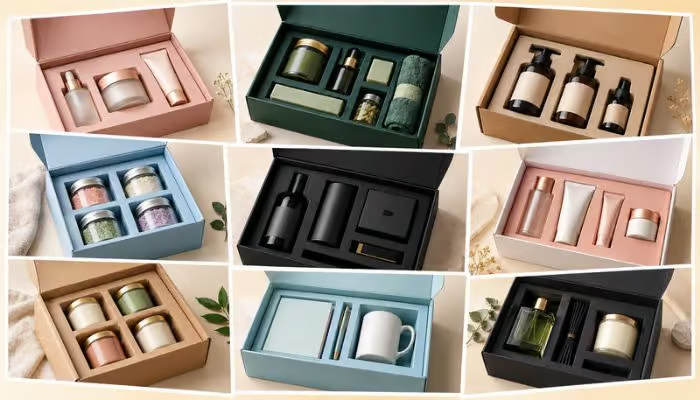
Even with suitable materials, protective packaging can fail when the insert dimensions, cushioning structure, or packing method do not match the product’s needs. At Gentle Packing, we focus on identifying these risks and improving product fit, internal support, and protective structures. We also recommend checking packaging samples before bulk production to confirm their fit and stability.
Common protective packaging challenges and our solutions include:
- Product movement and collisions: Excess space allows products to shift or strike each other during transportation. We adjust insert cavities, supporting points, and compartment dimensions to hold products securely. For multi-item boxes, separate compartments help prevent direct contact.
- Insufficient cushioning and compression protection: Thin cushioning or poorly positioned supports may fail to protect products from impacts and stacking pressure. We consider product weight, cushioning thickness, and load distribution when designing protective inserts. Fragile or heavier items may also need stronger corrugated outer cartons.
- Scratches and surface damage: Hard insert surfaces, loose accessories, and repeated friction can damage delicate finishes. We use suitable fabric linings, protective sleeves, and dividers to reduce direct contact. For premium packaging, we also consider fabric shedding, color transfer, and surface compatibility.
- Moisture and humidity damage: Moisture can weaken paperboard, deform inserts, and damage moisture-sensitive products. Depending on storage and shipping conditions, we recommend suitable barrier films, sealed protective bags, or moisture-control materials to reduce these risks.
- Damage to custom boxes during bulk shipping: Empty custom boxes can suffer crushed corners, bent edges, and surface scratches during stacking and handling. For flat-packed folding cartons, we use suitable outer cartons and corner protection to reduce damage. Proper stacking and packing arrangements also help preserve the boxes’ shape and appearance.
Before bulk production, we recommend reviewing a physical packaging sample to confirm product fit and protective structure. This includes checking insert dimensions, product stability, cushioning space, and contact with fragile areas. We also check that the box closes properly and allows easy product removal. Once the design meets these requirements, we recommend confirming the materials, dimensions, and packing arrangement against the approved sample before mass production.
Conclusion
Effective protective packaging does more than fill empty space inside a box. The right combination of cushioning materials, fitted inserts, and box structures helps prevent product damage, reduce shipping risks, and preserve product presentation. Whether you’re packaging fragile glassware, electronics, or luxury gifts, the protective design should match the product’s characteristics and actual handling conditions.
At Gentle Packing, we combine custom box manufacturing, protective insert design, and material customization to create packaging that fits your products and branding requirements. Our flexible material and structural options help you balance protection, presentation, and cost, while sample reviews allow you to confirm the design before bulk production. Share your product specifications and packaging needs with us to request a custom packaging quote.
FAQs
1. What is the difference between cushioning and void fill?
Cushioning absorbs impact energy, while void fill occupies empty spaces to limit product movement. Foam pads and protective inserts can cushion fragile products, while crumpled paper and air pillows often fill gaps inside shipping boxes. Some materials perform both functions, but fragile or heavy products generally need more than loose void fill for adequate protection.
2. Do all custom boxes need protective inserts?
No. The need for protective inserts depends on product fragility, weight, shape, and shipping conditions. Lightweight, non-fragile products may only need a properly sized box or simple wrapping. Glassware, electronics, and premium products often benefit from fitted inserts that prevent movement, reduce surface contact, and provide additional support.
3. Which protective packaging materials are more sustainable?
Paperboard and molded pulp can offer practical fiber-based alternatives to certain plastic and foam packaging materials. Recycled content, responsible fiber sourcing, and local recycling availability also influence sustainability. You should consider material consumption, protective performance, reusability, and the available disposal or recycling options.
4. How can you reduce protective packaging costs without compromising protection?
Start by matching the box dimensions and protective inserts to the product’s actual size and weight. Properly fitted inserts can reduce unnecessary void fill, oversized cartons, and material waste. You can also compare paperboard, molded pulp, and foam options based on order volume and tooling costs. Sample checks help confirm that cost reductions do not weaken product protection.
5. What is the best protective packaging for fragile products?
The best protective packaging combines secure product positioning with sufficient impact cushioning. Molded pulp trays, EPE foam, and corrugated supports are common options for fragile products such as glass bottles and ceramics. The final design should protect vulnerable areas, prevent direct contact with box walls, and provide enough cushioning space for expected shipping impacts.
Pingback: how to switch between sim cards on iphone duo