



Packing plays an important role in custom bag orders because it affects product presentation, storage, and shipping arrangements. The right method depends on the bag’s material, construction, intended use, and delivery requirements. Confirming these details early helps you plan packaging and bulk shipments with fewer last-minute changes.
This guide explains flat, folded, and rolled bag arrangements, then covers individual and bulk packaging. It also covers packed-bag measurements, package and carton sizing, and the specifications to confirm before bulk production.
Why Do Clear Packing Specifications Matter for Custom Bag Orders?

Clear packing specifications define the requirements for arranging, protecting, and preparing finished bags for shipment. For bulk custom bag orders, these instructions help maintain consistent packing throughout production.
- Product Protection and Finished Appearance: Clear packing instructions protect printed surfaces, embroidered logos, handles, zippers, and metal accessories from unnecessary creasing, friction, and pressure during storage and transportation.
- Consistent Packing Across Bulk Orders: Specifying packing arrangements, folding methods, and grouping requirements helps maintain consistent packing and simplifies quantity checks.
- Accurate Carton Planning and Shipping Costs: Your packing choices determine carton dimensions, quantities per carton, and total shipment volume. These details give you a more accurate basis for freight estimates and warehouse planning.
- Meeting Your Distribution and Handling Requirements: Individual packing suits many retail and e-commerce orders, while bulk packing often works better for wholesale distribution, promotional campaigns, and events.
- Controlling Packaging Costs: Confirming packaging materials, quantities, and carton requirements early supports better material and labor planning, reducing unnecessary repacking and production adjustments.
Flat, Folded, and Rolled Packing for Custom Bags
Flat, folded, and rolled packing are three common ways to arrange finished bags for storage and shipment. Each method creates a different packed shape and affects carton space, product presentation, and handling. You can also combine these arrangements with individual or bulk packing, depending on your order requirements.
| Comparison Factor | Flat Packing | Folded Packing | Rolled Packing |
| Arrangement | Laid flat and stacked | Folded along selected lines | Rolled into cylindrical bundles |
| Suitable Bag Types | Simple cotton totes, non-woven and flexible PP woven bags | Standard tote bags, canvas bags, and large shopping bags | Lightweight polyester, nylon, and soft drawstring bags |
| Main Advantage | Avoids additional fold lines | Reduces packed width or height | Creates uniform, easy-to-handle bundles |
| Space Requirements | Usually requires more carton space | Generally saves more space than flat packing | More compact per bag, but gaps may reduce carton efficiency |
| Main Limitation | Long handles or gussets may create uneven stacks | Can leave visible fold lines | Not suitable for bulky or rigid structures |
Flat Packing

Flat packing keeps each bag in its natural, unfolded position, with the front and back panels resting against each other. It suits simple cotton totes, lightweight non-woven bags, and flexible PP woven bags without rigid inserts. This arrangement avoids additional fold lines and maintains flat panels, but larger orders may require more stacking space.
When specifying flat packing, pay attention to these details:
- Handle Placement: Keep handles and shoulder straps flat against the bag body to prevent tangling or uneven stacking.
- Gusset Position: Allow side and bottom gussets to sit naturally instead of forcing them into a compressed position.
- Stacking Arrangement: Confirm the number of bags per stack and avoid excessive pressure on the bottom layers, especially when the bags have printed surfaces or decorative finishes.
Folded Packing

Folded packing reduces a bag’s overall footprint by bringing its panels together along selected fold lines. You can use this approach for standard cotton totes, canvas bags, non-woven shopping bags, and other flexible reusable bags. It makes bulk storage and carton arrangement more compact, although thick fabrics and repeated folds may leave visible creases.
Common folding arrangements include:
- Half Folding: Fold the bag in half from one side to the other, reducing its width while keeping its original height. This straightforward option works well for standard rectangular tote bags when you want to reduce the packed width without creating multiple fold lines.
- Tri-folding: Divide the bag into three sections across its width and fold both sides inward. This creates a narrower package than half folding, making it useful for wide shopping bags or large tote bags that need to fit into smaller individual polybags or cartons.
- Bottom-to-Top Folding: Fold the bottom edge toward the opening to reduce the bag’s height. Choose this arrangement for tall tote bags, long shopping bags, or designs with extended body panels when the original bag length makes storage or carton arrangement difficult.
Rolled Packing
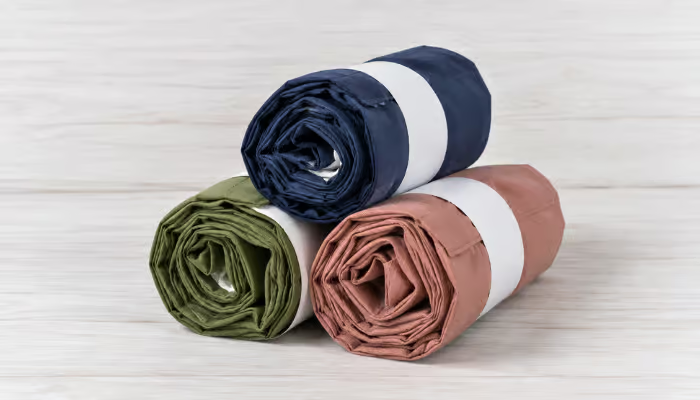
Rolled packing turns a bag into a cylindrical or rounded bundle. It suits lightweight polyester bags, nylon foldable shopping bags, and some soft drawstring bags that can bend easily. Rolling creates compact individual bundles for storage or promotional distribution, but thick canvas bags, rigid-bottom designs, and bags with bulky hardware may not roll neatly. Rounded bundles may also leave gaps in cartons, so rolling does not always save more space than folding.
When choosing rolled packing, consider these practical details:
- Rolling Direction: Roll the bag evenly from one end while keeping handles, straps, and drawcords aligned with the bag body. This prevents loose components from creating bulky sections.
- Securing Method: Use a paper band, paper sleeve, or suitable fastening material to keep the roll together. Avoid excessive tightening that could leave pressure marks.
- Bundle Shape: Check that each roll maintains a reasonably consistent shape. Uniform bundles are easier to arrange in cartons than rolls with different diameters or loose ends.
Individual vs. Bulk Packing for Custom Bags
Individual and bulk packing define how you group finished bags for storage and shipment. Individual packing gives each bag its own package, while bulk packing groups multiple bags into bundles or cartons. Both options can be combined with flat, folded, or rolled arrangements to suit your distribution needs.
Individual Packing: One Bag per Package

Individual packing gives each custom bag its own package for protection, identification, or presentation. It keeps bags separate during handling but adds packaging materials and labor costs. Depending on the packaging used, it may also increase the final packed volume.
Common options include:
- Individual Polybags: Place each bag inside a separate PE or OPP bag. Clear polybags keep the product visible while protecting it from dust and surface contact. Choose a size that accommodates the folded or flat bag without excessive empty space or compression.
- Paper Sleeves and Belly Bands: Add a printed paper sleeve or belly band around each folded bag to create a neat, retail-ready presentation. You can display your logo, product details, or brand message without covering the entire bag. However, this option offers little protection against dust and moisture compared with enclosed packaging.
- Tissue Paper Wrapping: Wrap each bag in tissue paper to separate finished surfaces and improve presentation. This option works particularly well for retail gifts and corporate gift sets, although tissue paper alone provides limited protection during transportation.
Bulk Packing: Multiple Bags Packed Together

Bulk packing groups multiple bags into stacks, bundles, or inner packs before carton packing. It suits wholesale orders, trade show giveaways, and promotional campaigns where easy counting and distribution matter more than individual presentation. Pay attention to surface friction, stacking pressure, and product variations during packing.
Common bulk packing arrangements include:
- Stacked Packing: Arrange flat or folded bags in uniform piles and place them directly into export cartons. This works well for large orders with the same bag style and size. Keep the stacks aligned to prevent uneven pressure on the lower layers.
- Bundled Packing: Group a specified quantity of bags into one bundle and secure the stack with a paper band or suitable bundling strap. This makes bulk quantities easier to count, handle, and distribute. Keep the band snug without putting excessive pressure on the bags.
- Inner Pack Grouping: Divide mixed orders into smaller groups according to bag style, color, or size before placing them in export cartons. This arrangement makes warehouse sorting and order distribution easier, particularly when one shipment contains multiple product variations.
How to Measure and Choose the Right Packaging Size for Custom Bags?
The right packaging size depends on your bag’s dimensions after flat, folded, or rolled packing. Use the final packed measurements, not the original bag dimensions, to determine individual packaging and carton sizes. You also need to account for packaging thickness, closure space, and the number of bags per carton.

Measure Bags in Their Final Packed Form
Arrange a finished sample using your preferred packing method, then measure its actual length, width, and thickness. Include any handles, gussets, or accessories that extend beyond the packed bag. These measurements provide the starting point for selecting individual packaging and planning carton capacity.
| Packing Method | Dimensions to Measure | Measurement Instructions |
| Flat Packing | Length × Width × Thickness | Measure the outer edges of the flattened bag, including any protruding handles or gussets. |
| Folded Packing | Length × Width × Thickness | Record the longest, widest, and thickest points of the folded bag. |
| Rolled Packing | Roll Length × Diameter | The full roll length and maximum diameter should account for any protruding straps. |
Determine the Right Individual Packaging Size
Choose individual packaging based on the bag’s final packed dimensions, allowing enough room for its thickness, easy insertion, and closure. For example, if your folded tote measures 20 × 15 × 2 cm (length × width × thickness), you could start by testing a flat polybag with an 18 cm usable opening and 24 cm usable length. This is an initial estimate, not a fixed standard.
Before placing a bulk order, insert an actual folded sample and check that it fits without bunching or stretching the packaging. Different materials and package designs also require different measurements:
- PE or OPP Polybags: Confirm the usable internal width and length, excluding any sealing flap. Allow room for the bag’s thickness and check that the closure seals without tension.
- Paper Sleeves and Belly Bands: Measure around the folded bag where the paper will sit, then add enough length for overlap and fastening.
- Tissue Paper Wrapping: Choose a sheet that covers the entire bag, with extra material for overlapping and folding the edges.
Calculate Inner Pack and Export Carton Dimensions
Once you confirm the individual packaging size, determine how many bags to pack together and how much space they need inside an export carton. Use the actual dimensions of packed bags or bundles to plan your carton size.
- Confirm Packing Quantity: Decide how many bags go into each bundle or inner pack and how many units each export carton should contain. If you don’t need inner packs, you can place the bags directly into the carton.
- Measure the Packing Arrangement: Arrange the required quantity in stacks or layers, then measure the combined length, width, and height. Use actual samples because flexible bags may compress when stacked.
- Confirm Carton Dimensions: Check that the packed bags fit within the carton’s usable internal dimensions. Refer to the FEFCO Code for standard carton styles and dimension conventions. Use the finished carton’s external length, width, and height to calculate shipping volume and request freight quotations.
Choose the Right Packing Method for Custom Bags
The right packing method depends on your bag’s material, construction, logo decoration, and distribution needs. Choose an arrangement that protects the finished bag while balancing packaging space and shipping costs.
Bag Material, Flexibility, and Thickness

Different bag materials vary in thickness and flexibility, which affects how easily they can be folded or rolled. Lightweight polyester and nylon bags are generally suitable for both methods. Cotton and non-woven bags also fold well, while heavier canvas and jute bags may form bulkier folds because of their thickness and stiffness.
Surface finishes deserve attention too. Sharp folds can leave visible crease marks on laminated PP woven bags and certain coated fabrics, especially after prolonged storage under pressure. Unpack a folded sample and inspect the surface before confirming the packing method for your bulk order.
Bag Structure and Functional Components
A bag’s construction can limit your packing options even when the material is flexible. Simple flat totes are easy to fold or stack, but gusseted bags, reinforced bottoms, and structured panels need more attention. Forcing these parts into tight folds may leave uneven layers or distort the intended shape.
Handles and accessories create additional considerations. Long shoulder straps can add bulk to folded sections, while metal eyelets, buckles, and zippers may press against neighboring bags. For bags with rigid inserts or shaped bottoms, consider flat packing or an arrangement that supports the original structure rather than forcing compact folding.
Logo Placement and Decoration Methods

Your logo’s position and decoration method affect packing choices. For small corner logos, fold the bag along the unprinted sections. With large centered graphics, keep the printed panel flat or fold around its edges. If the design extends onto gussets or bottom panels, avoid sharp creases and direct pressure on those areas. Different decoration methods also have specific packing requirements:
- Screen Printing: Properly cured prints generally tolerate flat or folded packing. For large graphics or thick ink layers, flat packing can reduce visible crease marks.
- Heat Transfer Printing: Flexible transfers can handle normal folding, but thicker films may crease under sharp bends or prolonged pressure. Choose flat packing or fold around large printed areas.
- Sublimation Printing: Sublimation dyes become part of polyester fibers without forming a separate surface film. Lightweight sublimated bags usually accommodate folded or rolled packing, depending on fabric flexibility.
- Embroidery and Patches: Raised decorations create uneven stacking pressure. Flat packing or careful folding works well, while individual wrapping can prevent contact with adjacent bags.
- Laminated PP Woven Printing: Laminated surfaces may retain visible crease marks. Flat packing is often preferable for large printed panels, while gentle folding may suit flexible laminates. Avoid tight rolling on stiffer constructions.
Intended Use and Individual Packaging Requirements
Your distribution channel affects whether you need individual or bulk packing. Retail products often require separate packaging for presentation and identification, while wholesale and promotional orders may prioritize easy handling and distribution. Choose an arrangement that matches how your bags will reach customers.
- Retail Sales: Fold bags into consistent sizes and use clear polybags or printed paper sleeves for individual presentation. Add product labels or barcodes when required.
- Wholesale Distribution: Group flat or folded bags into counted stacks or bundles. Separate different styles, colors, or sizes to simplify inventory management and order fulfillment.
- Trade Shows and Events: Choose bulk packing with manageable bundle quantities so staff can unpack and distribute bags quickly without opening individual packages.
- Corporate Gifts: Consider individual paper sleeves, tissue wrapping, or polybags when each bag needs separate presentation or forms part of a gift set.
- E-commerce Fulfillment: Confirm individual packaging dimensions, barcode placement, and any labeling requirements specified by your fulfillment provider.
Shipping Volume and Product Protection

Flat packing generally requires more carton space, while folded packing often allows more bags per carton. Rolled packing can create compact bundles, but gaps between rolls may reduce carton efficiency.
For bulk orders, compare the total carton count and shipping volume (CBM) for each suitable packing method. Avoid packing bags too tightly to save space, as excessive pressure can cause permanent creases, damage printed surfaces, or distort the bag’s shape. Choose an arrangement that balances shipping efficiency with product protection.
Essential Packing Specifications for Custom Bag Orders
Your custom bag packing specifications should define the required packing arrangement, individual packaging, quantities, carton dimensions, and labeling instructions. Include these details in your purchase order or packing specification sheet, along with any reference photos or special requirements, to provide clear instructions for bulk packing.
| Packing Specification | Information to Confirm |
| Packing Arrangement | Flat, folded, or rolled; folding direction and handle position |
| Final Packed Dimensions | Length × width × thickness, or roll length × diameter |
| Individual Packaging | Material, usable size, film thickness if required, and closure |
| Bundle or Inner Pack Quantity | Number of bags per bundle or inner pack |
| Export Carton Quantity | Total pieces per carton |
| Product Sorting | Separate or mixed colors, sizes, and SKUs |
| Carton Specifications | Internal/external dimensions, net weight, and gross weight |
| Carton Markings | PO number, SKU, quantity, carton numbering, and required labels |
| Approval Reference | Approved packed sample, reference photos, or packing specification sheet |
Packing Method and Arrangement Instructions
Specify flat, folded, or rolled packing, along with the required arrangement. For folded bags, indicate the folding direction, number of folds, and handle position. For rolled packing, define the rolling direction and fastening method. Include the agreed packed dimensions and reference photos to establish a consistent packing standard for your order.
Individual Packaging Materials and Requirements
State whether each bag needs individual packaging and specify the material, dimensions, and closure method. For PE or OPP polybags, confirm the film thickness if required, usable dimensions, and sealing method. Paper sleeves need a defined width, overlap, and fastening method. If you require product labels, barcodes, or insert cards, provide their dimensions, content, and placement instructions.
Packing Quantity and Sorting Requirements

Clearly define how many bags belong in each bundle, inner pack, and export carton. For example, you might specify 25 folded bags per bundle and four bundles per carton, totaling 100 bags per carton. The actual quantity should suit your bag size and carton capacity.
For orders with multiple colors, sizes, or styles, indicate whether you want separate cartons or mixed packing. If you allow mixed cartons, provide the exact quantity of each variation to prevent sorting errors during receiving and distribution.
Export Carton Dimensions and Weight
If your warehouse or shipping provider has carton size or weight limits, share them with your supplier before packing begins. Otherwise, request suitable carton specifications based on your bag dimensions and agreed packing quantities.
Record the final carton dimensions (L × W × H), net weight, and gross weight per carton in your packing specifications. Use internal dimensions to check carton capacity and external dimensions for shipping volume calculations. Verify the figures through trial packing.
Carton Markings and Special Packing Instructions

Clear carton markings allow you and your warehouse team to identify products, check quantities, and sort shipments without opening every box. Provide the required shipping mark details and label layout before carton packing begins.
- Product Identification: Include the purchase order number, product description, SKU, color, size, and quantity per carton where applicable.
- Carton Identification: Specify carton numbering, such as 1/20, gross weight, and any other shipping marks required by your freight forwarder or receiving warehouse.
- Special Labeling Requirements: Provide barcode formats, label dimensions, placement positions, and any required handling marks or warehouse-specific instructions.
Why Should You Approve a Packed Sample Before Bulk Production?
Written packing specifications cannot fully show how your bags will look and fit after packing. Approving a packed sample allows you to identify creases, poor packaging fit, or unsuitable arrangements before these problems affect the entire order. It also establishes a clear reference for consistent packing during bulk production.
Focus on these three checks:
- Packing Method and Finished Appearance: Check that the sample follows the agreed arrangement. Unpack the bag to inspect for unwanted creases, distorted handles, or pressure marks on printed surfaces and accessories.
- Packaging Fit and Carton Capacity: Confirm that the individual package fits and closes without excessive pressure. For carton approval, test the planned quantity in a trial carton to verify stacking, dimensions, weight, and closure.
- Approved Packing Standard: Record any adjustments made during sample approval and update the final packing instructions. Keep the approved sample and reference photos for quality checks during bulk packing.
Conclusion
The right packing method should suit your custom bag design, storage needs, and shipping requirements. Whether you choose flat, folded, or rolled packing, confirm the individual packaging, packed dimensions, and carton quantities before bulk production. An approved packing sample gives you a practical reference for checking the finished order.
At Gentle Packing, we manufacture custom reusable bags with options for materials, sizes, construction, branding, and packing. Share your bag specifications, order quantity, and packing requirements with us, and we’ll help you review a suitable solution for your project.
FAQs
1. What is the difference between flat packing and folded packing?
Flat packing keeps bags unfolded and stacked, reducing additional fold lines. Folded packing reduces the bag’s width or height to create smaller packages. Flat packing generally requires more carton space, while folded packing often accommodates more bags per carton.
2. Is rolled packing suitable for canvas tote bags?
Lightweight, flexible canvas tote bags may be suitable for rolling, but thick or stiff canvas can create bulky rolls and visible creases. For heavier canvas bags, flat or folded packing is often more practical. Test the finished roll before confirming your packing method.
3. Can folded or rolled bags be individually packed in polybags?
Yes. You can pack folded or rolled reusable bags individually in PE or OPP polybags. Choose a package that accommodates the finished dimensions without excessive compression, and allow sufficient space for insertion and closure.
4. Does individual polybag packing increase shipping costs?
Individual polybag packing adds packaging materials and labor costs. It may also increase shipping volume by adding thickness to each unit. The actual freight impact depends on how many packed bags fit into each carton and the shipment’s total volume or chargeable weight.
5. How many custom bags can fit in one export carton?
There is no fixed quantity. Carton capacity depends on the bag’s packed dimensions, material thickness, packing arrangement, and carton size. For accurate planning, arrange the proposed quantity in a trial carton and check the final dimensions, gross weight, and product condition.
6. When should I confirm packing requirements with my supplier?
Share your packing preferences during the quotation stage so the factory can account for packaging materials, labor, and carton requirements. Finalize the packing method, individual packaging, and carton configuration through sample approval before bulk packing begins.