



The EU Packaging and Packaging Waste Regulation (PPWR) began applying on August 12, 2026, bringing new requirements for businesses sourcing packaging for the European market. Claims such as “recyclable” or “reusable” offer little assurance unless suppliers can explain the materials, supporting evidence, and applicable requirements behind them.
This EU PPWR packaging procurement checklist covers the questions to ask suppliers, the documents to request, and key material differences. It also shows what to verify when purchasing custom reusable bags for EU markets.
Which EU PPWR Requirements Matter for Packaging Procurement in 2026?
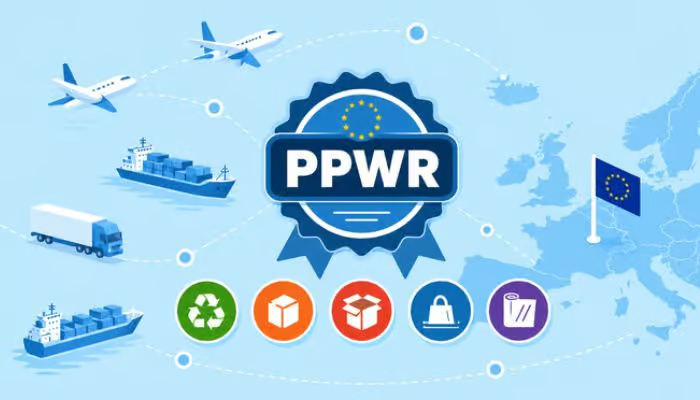
The EU Packaging and Packaging Waste Regulation (PPWR), officially Regulation (EU) 2025/40, establishes common requirements for packaging placed on the EU market, including imported packaging. It aims to reduce packaging waste, improve recyclability, restrict harmful substances, and promote more sustainable packaging.
The regulation began applying on August 12, 2026, with requirements covering chemical restrictions, including PFAS limits for food-contact packaging, and conformity documentation. Other measures follow a phased timeline, including harmonised labelling from 2028 at the earliest and further recyclability, recycled plastic content, and packaging minimisation requirements from 2030 or later.
Not every custom bag falls under the PPWR. Its intended use matters more than its material or style. A shopping bag provided by a retailer to carry purchases generally qualifies as packaging, whether customers receive it free or pay for it. In contrast, a canvas tote sold as a standalone fashion product generally does not. The same distinction applies to promotional and foldable bags, depending on their intended use. Before purchasing, determine whether the bag serves a packaging function or is sold as an independent product.
Businesses can follow these EU PPWR compliance steps to prepare their packaging procurement:
- Identify Your Packaging Portfolio: List each packaging product, including shopping bags, retail boxes, mailers, and transport cartons. Record materials, components, packaging weight, intended use, and EU destination markets.
- Determine Applicable Requirements: Check whether each product qualifies as packaging and which current or future PPWR provisions apply. Identify the responsible manufacturer, EU importer, and other relevant economic operators.
- Review Packaging Specifications: Compare current materials and designs with applicable restrictions. Check chemical substances, coatings, printing, and relevant recyclability considerations. Flag designs that may require changes before future deadlines.
- Collect and Verify Compliance Evidence: Request product-specific material specifications, relevant test reports, and applicable technical documentation. Confirm that the documents match the packaging specifications and that the responsible parties can support the required conformity assessment.
- Update Procurement and Supplier Controls: Include applicable PPWR requirements in supplier agreements and purchasing specifications. Require approval for material changes, verify production against approved samples, and schedule reviews before upcoming regulatory deadlines.
10 Essential PPWR Questions to Ask Packaging Suppliers
Before placing bulk orders, you should ask suppliers specific questions about material safety, recyclability, recycled content, traceability, packaging design, reuse, labelling, and production control. These ten questions will help you assess PPWR compliance risks and verify whether suppliers can support their claims with reliable documentation.

1. Packaging Materials and Component Composition
A complete packaging specification should cover more than the main fabric or resin. Custom bags may combine PP, RPET, cotton, or other materials with coatings, laminates, printing inks, adhesives, labels, and reinforced handles. These components can affect chemical safety, recyclability, and environmental claims, particularly when different materials are permanently bonded. Ask suppliers for component-level specifications that reflect the finished product and approved production design.
Ask your suppliers:
- Can you provide the material composition and specifications for all major components of the finished packaging?
- Which coatings, inks, adhesives, laminates, or accessories could affect chemical safety or end-of-life treatment?
- Are different materials permanently bonded, or can they be separated where necessary for recycling?
- How do you ensure the documented material structure matches the finished product delivered in bulk?
2. Restricted Substances and Food-Contact Safety
The PPWR addresses substances of concern in packaging and restricts PFAS in food-contact packaging. Other EU chemical requirements, including REACH restrictions, may also apply. Your assessment should cover relevant inks, coatings, adhesives, and recycled inputs, not just the base material. For food-contact packaging, confirm the intended food type, contact temperature, and duration, and request appropriate safety evidence. A general “food-grade” claim cannot establish suitability for every application.
Ask your suppliers:
- Have you assessed the packaging against applicable PPWR restrictions and other relevant EU chemical requirements?
- Does the assessment cover the main material, inks, coatings, adhesives, and other relevant components?
- For food-contact packaging, what safety assessments or migration tests support the intended use?
- How do you identify and manage substances of concern introduced through recycled materials or changes in upstream formulations?
3. Design for Recycling and End-of-Life Management
The PPWR introduces phased recyclability requirements, including design-for-recycling criteria from 2030 and later requirements for recycling at scale. Recyclability depends on the finished packaging structure, not simply its main material. Laminates, coatings, adhesives, and labels may interfere with sorting or recycling processes. Ask suppliers to assess the complete design, identify practical recycling limitations, and recommend improvements that support applicable requirements.
Ask your suppliers:
- Has the complete packaging design been assessed against the applicable EU recyclability criteria?
- Are its materials, inks, coatings, labels, and bonded layers compatible with the intended sorting and recycling processes?
- What evidence supports the recyclability claim, and does it cover the complete packaging or only the main material?
- What design changes could improve end-of-life performance and prepare the packaging for upcoming requirements?
4. Recycled Plastic Content and Verification
The PPWR sets minimum post-consumer recycled (PCR) plastic content targets for specified packaging categories in 2030 and 2040. Under Article 7 of the PPWR, manufacturers calculate recycled content using an annual average for each manufacturing plant, packaging type, and format, subject to applicable category rules and exemptions. When sourcing plastic packaging, distinguish PCR from production scrap, verify calculation records, and confirm that material shortages or quality variations will not compromise the agreed recycled content or product performance.
Ask your suppliers:
- What percentage of the plastic content is PCR material, and which components does the stated percentage cover?
- How do you distinguish post-consumer material from production scrap or other recycled inputs?
- What calculation method and material records support the recycled-content claim?
- How do you manage PCR material shortages, quality variation, or price fluctuations without making unapproved substitutions?
5. Material Traceability and Recycled Content Origin
Material traceability helps you verify whether environmental claims relate to the materials actually used in your order. Suppliers should connect resin, film, fabric, and recycled inputs to upstream sources and relevant production batches rather than relying on generic certificates. Review how they verify material origin, maintain supporting records, and manage supplier changes. Although the PPWR does not require a universal digital product passport for every packaging product, suppliers still need appropriate evidence to support applicable compliance assessments and material claims.
Ask your suppliers:
- Can you trace the relevant raw materials from upstream suppliers to the production batches used for our order?
- What records support claims about recycled content, material origin, or other environmental attributes?
- How do you verify information received from upstream suppliers and resolve inconsistencies?
- If a material source changes, how do you confirm that the revised material still meets the agreed specifications and requirements?
6. Packaging Minimization and Material Efficiency
The PPWR introduces packaging minimisation requirements from 2030, subject to applicable criteria and exemptions. The goal is to reduce unnecessary weight and volume without compromising packaging performance. For custom bags, review fabric weight, dimensions, gussets, handles, seams, and reinforcement. For shipping packaging, assess carton sizes, protective layers, and empty space. Suppliers should support material reductions with appropriate performance checks to avoid increasing product damage or waste.
Ask your suppliers:
- Have you assessed whether the packaging uses more material, layers, or volume than its intended function requires?
- Can you reduce material consumption while maintaining the required load capacity, durability, and product protection?
- What design specifications or performance checks support your proposed material reductions?
- Can you optimise carton dimensions and shipment configuration without increasing damage risk or requiring additional protective packaging?
7. Reusability, Durability, and Reuse Systems
A “reusable” product claim does not automatically establish compliance with the PPWR. First, confirm whether the bag qualifies as packaging and which reuse requirements apply to its intended use. For custom reusable bags, evaluate fabric durability, seam strength, handle construction, load capacity, and repeated-use performance. If the packaging operates within a reuse system, also assess its suitability for collection, return, cleaning, tracking, and other relevant operations.
Ask your suppliers:
- What intended use, load conditions, and frequency of use is the bag designed to support?
- What performance evidence supports claims about seam strength, handle attachment, load capacity, and durability?
- If the packaging is intended to meet a specific reusable-packaging requirement, how have the applicable criteria been assessed?
- If a reuse system is involved, can the packaging support its relevant collection, return, cleaning, or tracking arrangements?
8. Packaging Labelling and Consumer Information
The PPWR introduces harmonised packaging labelling and consumer-information requirements on phased timelines. Your labels and recycling instructions should reflect the finished material structure and applicable market requirements. Environmental claims such as “recyclable,” “reusable,” or “made from recycled plastic” also need reliable supporting evidence. Confirm artwork requirements early and ask suppliers to report material changes that could affect approved labels. Do not assume every packaging product requires a QR code or digital product passport.
Ask your suppliers:
- Which EU labelling and consumer-information requirements apply to our packaging, and when must we implement them?
- Can you confirm the finished material composition needed for accurate labels and recycling instructions?
- What evidence supports claims relating to recyclability, reuse, or recycled content?
- How will you communicate material changes that could make approved labels or environmental claims inaccurate?
9. Secondary and Transport Packaging
Your PPWR procurement review should also cover export cartons, protective wrapping, strapping, pallet film, and other shipping materials. These packaging components may face relevant requirements for material use, minimisation, and empty space. Ask suppliers to evaluate carton dimensions, stacking efficiency, pallet configuration, and protective materials together. The objective is to reduce unnecessary packaging while maintaining sufficient protection during handling, storage, and international transport.
Ask your suppliers:
- Which materials and packaging formats will you use for export cartons, protective wrapping, and palletisation?
- Have you assessed carton dimensions, empty space, stacking efficiency, and material consumption for our shipment?
- Can you reduce unnecessary packaging while maintaining protection during handling, storage, and transport?
- What alternative materials or configurations could improve efficiency without increasing damage or replacement costs?
10. Production Consistency and Change Control
Maintaining PPWR compliance requires consistent material specifications and production controls. Changes in resin grades, recycled content, fabric weight, coatings, inks, or material suppliers can affect product performance and previous compliance assessments. Ask suppliers how they verify bulk production against approved samples, track production batches, and communicate significant changes. They should also evaluate alternative materials and obtain approval before making substitutions that could affect compliance or environmental claims.
Ask your suppliers:
- Will you notify us before changing specified materials, formulations, production sites, or subcontractors that could affect compliance?
- How do you verify that bulk production matches the approved sample and material specifications?
- If a change could affect compliance or an environmental claim, how will you support reassessment before the revised material is used?
- If a compliant material becomes unavailable, can you propose a qualified alternative and obtain approval before production continues?
What PPWR Compliance Documents Should You Request from Suppliers?
Before importing packaging into the EU, you need reliable documentation to demonstrate compliance with applicable PPWR requirements. The following four document categories help you verify regulatory conformity, material safety, and environmental claims before approving bulk production.
Packaging Technical Documentation

Under Annex VII of the PPWR, manufacturers must prepare technical documentation to demonstrate conformity with applicable requirements. This technical file provides the foundation for the packaging’s compliance assessment. When sourcing custom packaging, request product specification sheets, material composition declarations, technical drawings, and a bill of materials (BOM), along with relevant assessments and test reports.
The documentation should identify the packaging type, intended use, dimensions, material composition, and construction details. It should also include applicable technical specifications, assessment methods, and supporting test results. Check that the documents match your approved packaging design and production specifications. A general product catalogue or material specification sheet alone does not constitute a complete PPWR technical file.
EU Declaration of Conformity (DoC)

The EU Declaration of Conformity (DoC) is a formal document through which the responsible manufacturer declares that the packaging meets applicable PPWR requirements. Under Article 39 and Annex VIII, the declaration must identify the packaging, manufacturer, applicable EU legislation, and relevant technical specifications. It must also include a statement of responsibility and an authorised signature. A general supplier certificate or laboratory report cannot replace the required DoC.
The responsible manufacturer is not always the factory that physically produces the packaging. An EU brand ordering custom bags under its own name or trademark may hold this responsibility, while the EU importer must verify the required conformity assessment and documentation before placing the packaging on the market. Under Article 16, a Chinese packaging supplier must provide the relevant technical and material information needed to demonstrate conformity. Confirm these responsibilities before ordering, particularly when the brand owner and importer are different companies.
Material Safety and Test Reports
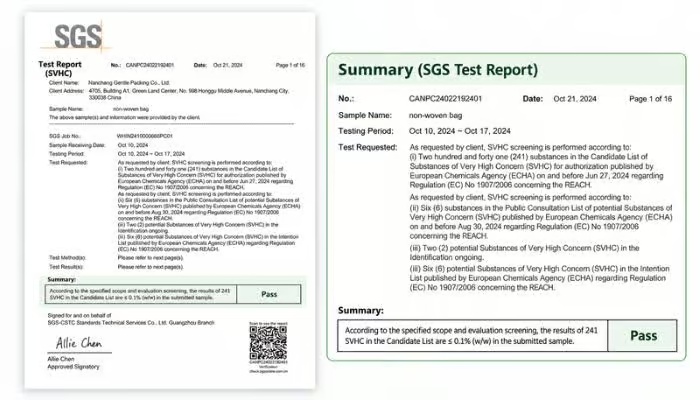
Material safety reports provide evidence that packaging meets applicable chemical restrictions and safety requirements. Depending on the packaging materials and intended use, request heavy metal test reports, relevant REACH compliance reports, and PFAS test results where applicable. For food-contact packaging, you may also need food-contact declarations of compliance, migration test reports, and supporting safety assessments under the relevant EU legislation.
A reliable test report should identify the tested sample, material or product description, test method, substances examined, applicable limits, and measured results. It should also state the testing laboratory and report date. For food-contact migration tests, check the specified food simulants, temperatures, and contact times. Prefer reports from laboratories accredited to ISO/IEC 17025 for the relevant tests, and confirm that the tested materials and conditions match your finished packaging.
Recyclability, Recycled Content, and Reuse Evidence

To support environmental claims and applicable PPWR requirements, request recyclability assessment reports, PCR content declarations, recycled-content calculation records, and material traceability documents. For reusable packaging, suppliers should also provide durability test reports and relevant reuse-system documentation. GRS or RCS certificates can offer additional verification of recycled materials, but they do not replace PPWR conformity documentation.
The key is to verify whether these documents apply to your finished packaging. Check the assessment standards, testing methods, results, and product scope. A certificate covering raw fabric may not cover a finished bag with coatings, printing, and accessories. You should also confirm that the evidence reflects your approved specifications and the PPWR requirements applicable to your packaging category.
What PPWR Requirements Apply to Different Custom Reusable Bags?
PPWR requirements can differ between reusable bags made from PP, RPET, and natural fibres. The following examples show how common bag designs affect compliance and what you should check before choosing a product.
Non-Woven PP and Woven PP Bags

Non-woven PP bags and woven PP bags may fall under the PPWR’s textile packaging category rather than conventional plastic film packaging. Qualifying textile sales packaging is exempt from certain recyclability requirements, but other PPWR rules still apply. Before relying on this exemption, check the complete bag structure. The material specification should identify the PP fabric, lamination, handles, and other components, especially when the bag combines different plastics.
Unlaminated PP fabric with compatible PP handles is a simpler choice when the application allows. For laminated woven PP bags, confirm whether the film uses BOPP, PE, or PET, and request evidence supporting any recyclability claims. If the bag contains recycled PP, verify the PCR percentage and material source. The supplier should also clarify which future recycled-content requirements apply to that packaging format, rather than applying the same target to every PP bag.
RPET Shopping Bags
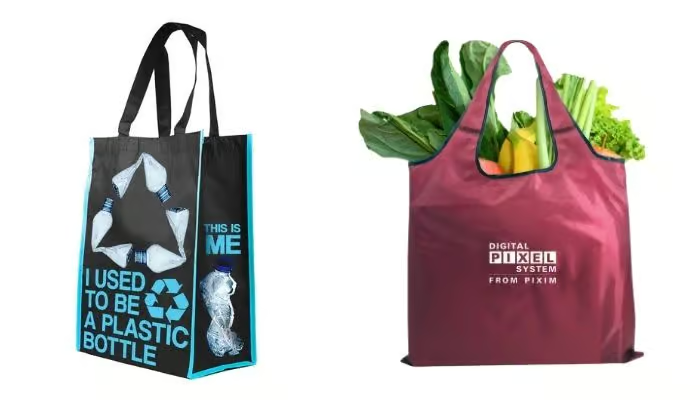
RPET shopping bags commonly use polyester fabric made from recycled PET bottles. However, 100% recycled polyester fabric does not necessarily mean 100% recycled content in the finished bag. Handles, labels, coatings, and sewing materials may contain virgin plastics. The PPWR also identifies synthetic textile bags separately from PET films and bottles, so their recycled-content requirements should not be determined using the material name alone.
Suppose a supplier offers a foldable RPET bag with 100% PCR polyester fabric, polyester handles, and water-based screen printing. The buyer should obtain the fabric composition declaration, PCR sourcing records, and material traceability documents to verify the claim. If only the body fabric contains verified PCR material, the product description should state this clearly. An unlaminated design also avoids adding another plastic layer, although recyclability claims still need evidence. GRS or RCS records can support recycled-content verification but do not replace PPWR conformity documentation.
Cotton, Canvas, and Jute Bags
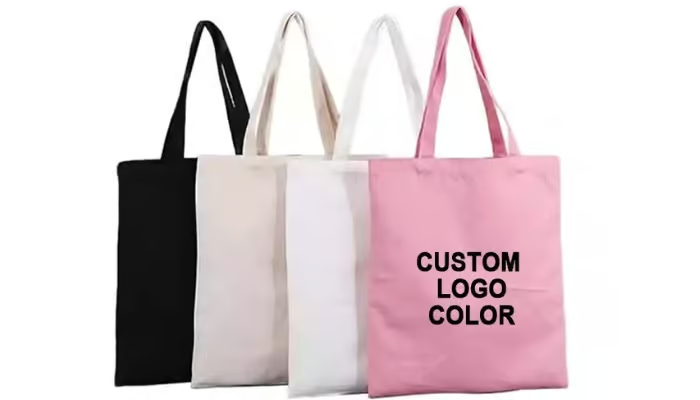
Natural cotton, canvas, and jute fibres do not fall under the PPWR’s minimum recycled plastic content targets. Qualifying textile sales packaging is also exempt from certain recyclability requirements. However, plastic linings and coatings can change the finished bag’s material composition.
Take an unlaminated jute shopping bag and a PE-laminated jute bag. Both may serve the same retail purpose, but the second contains an additional plastic layer that needs to appear in the material specification. Choose the unlaminated version if you want to avoid plastic components and do not need extra moisture protection. Dyed cotton bags and printed canvas bags should also have relevant chemical safety evidence. For reusable packaging claims, the supplier should provide suitable handle, seam, and repeated-use performance results. Natural fibres alone do not prove that the finished bag meets PPWR requirements.
PPWR Key Changes and Procurement Trends to Watch
The PPWR introduces new requirements in phases from 2026 to 2040. Packaging suppliers should prepare for these changes to maintain compliance and meet future EU market expectations. The exact dates of some requirements depend on further EU rules, so suppliers should follow the European Commission’s PPWR implementation timeline for updates.
- Stronger Recycled Content Verification (December 2026): Reliable PCR sourcing records and accurate calculation methods will become increasingly important. Recycled materials sourced outside the EU may also need additional evidence to meet the relevant equivalence rules.
- Clearer Recyclability Standards (2028–2030): New assessment criteria may affect packaging with mixed materials, coatings, and laminations. Reviewing these structures early can help manufacturers plan suitable designs while accounting for applicable exemptions.
- PFAS Restriction Review (February 2030): Changes following this review could affect certain packaging coatings and chemical treatments. Up-to-date material declarations will make it easier to identify affected products and consider alternatives.
- Recycled Content Target Review (February 2032): The findings may influence future recycled-content requirements. Maintaining dependable PCR sources and monitoring material availability will help businesses prepare for possible adjustments.
- Empty-Space Rule Review (February 2032): Any future changes could affect carton sizes, protective materials, and shipping configurations. Accurate packaging dimensions and material-use records will support future design adjustments.
- Hazardous Substances Evaluation (August 2033): Further assessments may lead to additional restrictions on chemicals used in packaging. Clear information about inks, adhesives, dyes, and finishes will help businesses respond to potential regulatory changes.
Conclusion
The PPWR brings new responsibilities to packaging procurement in the EU. The key is to identify which requirements apply to your packaging and verify compliance with reliable product-specific evidence. Clear material specifications, relevant test reports, recycled-content records, and conformity documentation can help you avoid compliance risks. As further requirements take effect, choosing suitable materials and keeping accurate records will also reduce the need for costly changes.
At Gentle Packing, we help businesses source custom reusable bags with suitable material options, product specifications, and supporting documentation. Whether you need PP, RPET, cotton, canvas, or jute bags, we can help you review your requirements and coordinate relevant testing. Contact us for a quote to discuss your packaging project and PPWR compliance needs.
FAQs
1. Does the PPWR apply to packaging imported from China?
Yes. The PPWR applies to packaging placed on the EU market, including products manufactured in China. EU importers and other responsible economic operators must ensure that the packaging meets applicable requirements, regardless of its country of origin.
2. What additional PPWR requirements apply to food-contact packaging?
Food-contact packaging must meet applicable EU food safety rules and PPWR chemical restrictions. Since August 12, 2026, the PPWR has restricted PFAS above specified limits. Relevant material declarations and migration tests may also be necessary.
3. Do packaging suppliers need a PPWR compliance certificate?
No single PPWR compliance certificate covers every packaging product. The responsible manufacturer must prepare the required technical documentation and EU Declaration of Conformity (DoC). Suppliers should provide relevant specifications, test reports, and supporting material records.
4. What happens if packaging does not comply with the PPWR?
Non-compliant packaging cannot legally enter the EU market under the applicable requirements. Authorities may require corrective action, restrict sales, or order withdrawal or recall. Penalties depend on the relevant enforcement rules.
5. How does the PPWR interact with national EPR and labelling rules?
The PPWR harmonises packaging requirements across the EU, but national EPR registration, reporting, and fee obligations still matter. Buyers must follow applicable national requirements while preparing for harmonised EU labelling rules as they take effect.
6. Are all reusable shopping bags subject to the same PPWR requirements?
No. Requirements depend on the bag’s packaging function, material composition, and construction. PP, RPET, cotton, and jute bags may face different obligations or exemptions. A reusable label alone does not establish compliance with the PPWR’s reusability criteria.