



Bag handles affect a bag’s appearance, carrying comfort, and functionality. From twisted paper cords on gift bags to webbing straps on reusable shopping bags, each design serves a different purpose. Material, construction, dimensions, and attachment methods determine how well the handle suits the bag and performs under load.
This guide covers common bag handle types and materials, explains handle length, width, and drop, and compares different attachment methods. It also outlines handle options for different bag applications and the key specifications to confirm before sample approval and bulk ordering.
Common Types of Handles for Custom Bags
Custom bags commonly feature flat, rope, tubular, or die-cut handles. Each type offers different benefits in appearance, comfort, and construction. The right choice depends on your bag material, intended use, and design requirements.
Flat Handles

Flat handles use a flat strip rather than a round cord. Their wider contact surface can distribute pressure across a larger area of the hand or shoulder, depending on the handle width and material. They also lie flat against the bag body when empty, making them practical for reusable shopping bags and promotional totes.
- Self-fabric handles: Cut from the bag’s own fabric, these handles match its color, print, and texture. Folding and stitching the fabric determines the handle’s thickness and finished appearance.
- Webbing handles: These use a separate woven strap with a consistent width and distinct surface texture. You can choose its material and color independently of the bag body, making contrasting colors and coordinated branding easier to achieve.
Rope Handles

Rope handles have a rounded profile that provides a cord-like grip and adds texture to a bag’s design. Unlike flat handles, their three-dimensional shape creates a more prominent visual detail. The rope’s construction determines its surface pattern and overall appearance, with twisted and braided styles offering distinct finishes.
- Twisted rope handles: Twisting yarns or smaller strands around one another creates continuous spiral ridges along the rope. This classic texture suits casual tote bags and beach bags, especially when you want a natural or nautical look.
- Braided rope handles: An interwoven surface, created by crossing strands over and under one another, gives braided rope a more intricate pattern without the pronounced spiral ridges of twisted rope. This textured finish works well for retail and gift bags where the handle serves as a decorative feature.
Tubular Handles

Tubular handles are formed by folding and stitching a strip into a tube or by weaving material into a tubular structure. Unlike twisted rope, which has visible spiral ridges, tubular handles typically have a more uniform surface. Depending on the construction, they can be hollow, padded, or flexible.
The tube diameter determines the thickness of the grip, while the construction affects how the handle bends and holds its shape. A flexible tubular handle can lie flatter against the bag when empty, while a padded or firmer version maintains a fuller, rounded profile. When choosing this style, consider the desired grip thickness, how the handle sits against the bag, and how its ends attach to the bag body.
Die-Cut Handles

Die-cut handles are openings cut directly into the bag body, so they do not require separate handle straps. Common shapes include oval openings, rounded rectangles, and custom cutouts. This integrated design reduces the number of components and works well for non-woven bags, plastic shopping bags, and suitable PP woven bags.
The shape and position of the opening determine both hand clearance and the material left to support the load. A wider opening provides more room for the hand, but it also removes more material from the bag panel. Rounded corners help reduce stress concentration, while sufficient material between the opening and the top edge helps limit tearing. For Die-cut handle bags carrying heavier items, a reinforced top edge or additional material around the opening may improve resistance to tearing.
Different Materials for Custom Bag Handles
Common bag handle materials include cotton, polyester, recycled PET (rPET), polypropylene (PP), nylon, jute, paper, satin ribbon, and PU leather. Each offers distinct characteristics in texture, flexibility, grip, and durability. The right choice depends on the bag’s construction, intended use, carrying requirements, and desired appearance.
Cotton Handles
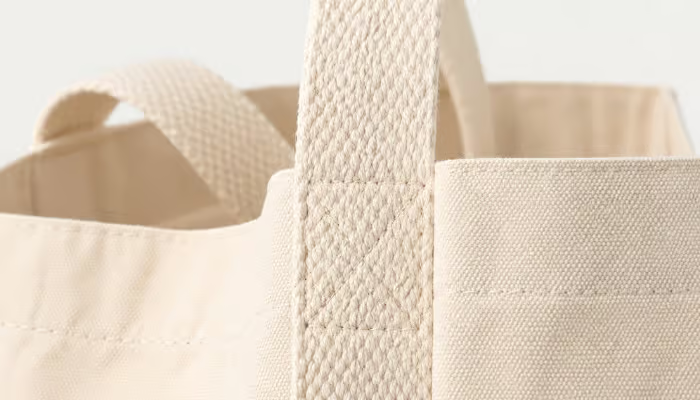
Cotton handles offer a soft, matte grip with a natural woven texture. They feel comfortable against the hand or shoulder and pair well with canvas totes and cotton bags. Their natural appearance also complements reusable bags with a simple, understated design.
The weave density affects how the handle feels and holds its shape. Tightly woven cotton webbing creates a firmer, more structured strap with better support for heavier loads, while looser weaves produce a softer, more flexible grip. Cotton absorbs moisture and dries relatively slowly, which is worth considering for bags used frequently outdoors.
Polyester and Recycled PET (rPET) Handles
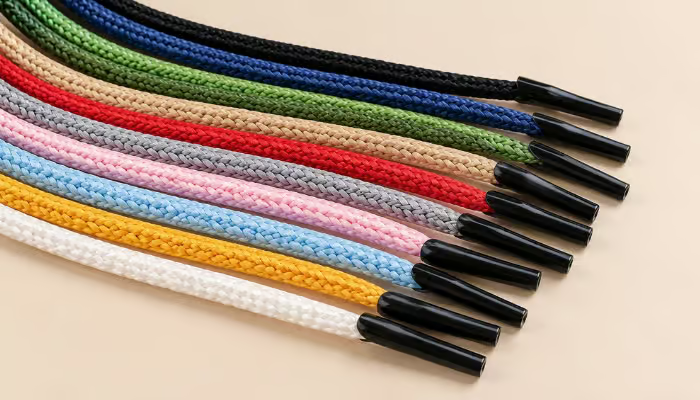
Polyester handles offer good abrasion resistance, low moisture absorption, and consistent color performance. Their woven surface maintains its appearance through repeated handling, making them suitable for reusable shopping bags and promotional totes. Polyester webbing also comes in a wide range of colors, allowing you to coordinate the handles with the bag body or create a contrasting design.
Recycled PET (rPET) handles use polyester fibers made from recycled PET materials, commonly recovered from used plastic bottles. Their finished performance depends on fiber quality and webbing construction. When yarn specifications and weaving methods are comparable, rPET webbing can offer similar durability and carrying performance to conventional polyester. For projects requiring verified recycled content, you can specify rPET materials backed by Textile Exchange’s RCS or GRS certification.
Polypropylene (PP) Handles
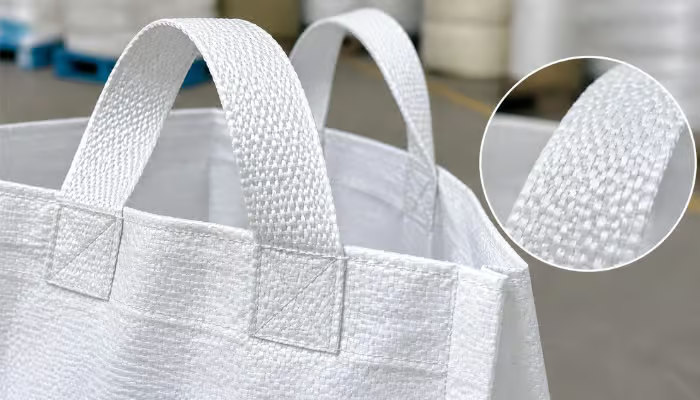
Polypropylene handles are lightweight, economical, and absorb very little moisture. They are widely used on non-woven promotional bags and reusable shopping bags where low material cost and practical construction are priorities.
PP handles commonly use two constructions: folded non-woven PP strips and woven PP webbing. Folded non-woven strips create thin, flexible handles for lightweight bags, while woven PP webbing forms a more defined strap with a firmer grip. For heavier loads, pay attention to yarn thickness, weave density, strap width, and attachment strength rather than judging capacity by width alone.
Nylon Handles

Nylon handles combine flexibility, tensile strength, and abrasion resistance. Tightly woven nylon webbing maintains a compact strap profile while bending easily, making it suitable for shoulder straps that move frequently or rub against adjustment hardware.
Nylon also has some elasticity, allowing the strap to stretch under tension and recover when the load is removed. This flexibility can improve carrying comfort, but excessive elongation may change the handle drop when carrying heavier items. The yarn strength and weave construction therefore matter when specifying nylon handles for load-bearing applications.
Jute Handles
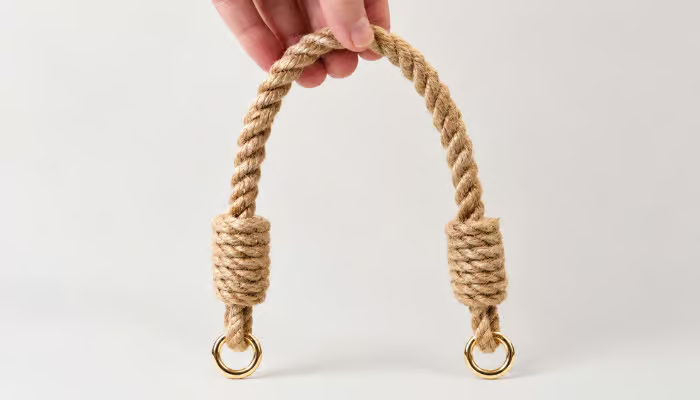
Jute handles feature a coarse surface, visible natural fibers, and a warm golden-brown color. Their distinctive texture complements jute shopping bags and reusable packaging with a rustic appearance. Unlike smooth synthetic webbing, jute gives the handle a more pronounced natural texture.
You can choose rounded jute rope for a fuller grip or flat jute tape for a wider contact surface. However, jute fibers are relatively stiff and can feel rough, particularly in narrow rope handles. They also absorb moisture, so dry storage is important for maintaining their condition.
Paper Handles

Paper handles come in two common forms: flat folded handles and twisted paper cords. Flat handles use several layers of folded paper to create a broad, low-profile grip, commonly seen on kraft shopping bags and takeaway bags. Twisted paper handles form rounded cords with a more prominent appearance, making them popular for retail shopping bags and gift packaging.
Both styles are available in natural kraft, white, or custom colors to match the bag design. However, paper handles can lose strength when exposed to moisture, especially during repeated carrying. For heavier loads, choose paper with suitable tensile and tear strength, assess its tensile properties using TAPPI/ANSI T 494, and reinforce the handle attachments with a paper patch to reduce the risk of handle failure.
Satin Ribbon Handles

Satin ribbon handles have a smooth, glossy surface that adds a decorative finish to gift bags, boutique packaging, and premium retail bags. Their wide color selection makes it easy to coordinate the ribbon with brand colors, while the smooth surface also provides opportunities for logo printing or foil stamping.
Double-faced satin has a glossy finish on both sides, whereas single-faced satin has a shinier front and a less glossy reverse. Narrow ribbons provide a delicate appearance but concentrate pressure on the hand, so wider ribbons are preferable when carrying comfort is important. Reinforced attachment points also help prevent the ribbon from pulling away from the bag.
PU Leather Handles

PU leather handles offer a smooth, refined appearance for custom shopping bags, handbags, and premium gift packaging. You can select different colors, textures, and surface finishes to complement the bag body or create a contrasting detail.
Flat PU leather strips create a slim profile, while folded and stitched constructions provide a fuller grip. The backing material, thickness, and construction determine the handle’s flexibility and strength. Repeated bending and friction can wear or peel the PU coating, so check the surface quality and attachment reinforcement when designing handles for frequently used bags.
Bag Handle Size and Measurement Guide
Bag handle dimensions affect hand clearance, shoulder space, and how the bag hangs when carried. Three measurements are particularly important: total handle length, handle drop, and handle width. Specifying these dimensions correctly helps you achieve the intended carrying position and avoid sizing problems during production.
Understanding Bag Handle Measurements

Bag handle measurements describe different parts of the finished handle. Use consistent measuring points when preparing specifications, and distinguish finished dimensions from the material dimensions required for cutting and sewing.
- Total handle length: This refers to the distance along the handle from one attachment point to the other. For sewn handles, distinguish the visible finished length from the full cut length, which includes material hidden inside the seams.
- Handle drop: With the handle held upright, take the vertical distance from the bag’s top edge to the highest inside point of the handle. This determines the clearance available for your hand or shoulder.
- Handle width: Measure across the finished flat strap. For rounded rope handles, specify the diameter instead. Die-cut handles require separate opening dimensions rather than strap width.
Recommended Bag Handle Dimensions by Carrying Style
Bag handle dimensions vary by carrying style. You should consider handle length, drop, and width together, as they affect hand clearance and carrying comfort. The distance between attachment points also affects the finished drop. Use the ranges below as starting references and adjust them to your bag size and intended load. For adjustable straps, specify both minimum and maximum usable lengths.
| Carrying Style | Total Length | Handle / Strap Drop | Handle Width | Typical Applications |
| Hand Carry | 14–18 in (36–46 cm) | 4–7 in (10–18 cm) | 0.5–1 in (13–25 mm) | Small shopping bags, gift bags, takeaway bags |
| Shoulder Carry | 22–26 in (56–66 cm) | 9–11 in (23–28 cm) | 1–1.5 in (25–38 mm) | Promotional bags, reusable shopping bags |
| Long Shoulder Carry | 26–30 in (66–76 cm) | 11–13 in (28–33 cm) | 1–1.5 in (25–38 mm) | Beach bags, large grocery bags |
| Crossbody Carry | 45–60 in (114–152 cm) | Approx. 20–26 in (51–66 cm) | 1–1.5 in (25–38 mm) | Messenger bags, convertible bags |
For crossbody bags, total length refers to the adjustable strap length, while the wearing drop is the approximate vertical distance from shoulder level to the top of the bag when worn. The actual fit depends on the wearer’s height and preferred bag position.
Bag Handle Attachment Methods and Hardware Options
The attachment method affects how securely the handle connects to the bag and transfers its load to the bag body. Fabric handles are typically sewn, while paper handles use adhesive bonding and reinforcement patches. Rivets, grommets, and metal hardware provide alternatives for specific designs. The right choice depends on the handle material, bag construction, and expected load.
Sewn Handle Attachments
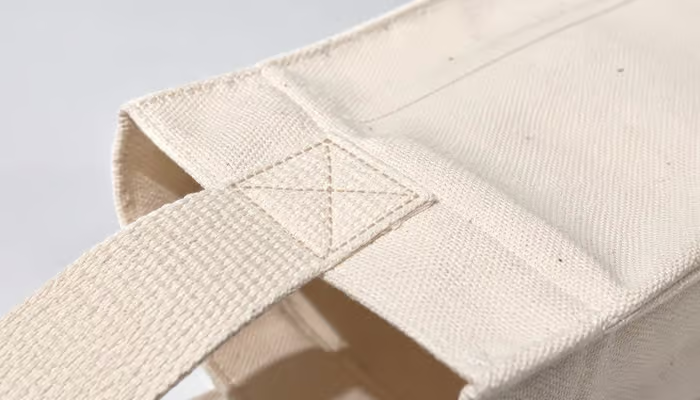
Sewing is a common method for attaching fabric handles to reusable bags. You can stitch the handle ends directly onto the bag panels, folding them back to create an overlap and conceal the raw edges, or insert them into the top hem before closing the seam. The main difference lies in the attachment position: surface-mounted handles sit on the bag panel, while seam-inserted handles are secured inside the bag’s upper seam. Both constructions can use different stitch patterns for additional reinforcement.
Common reinforcement stitches and patterns include:
- Box Stitch: Stitches form a rectangular outline around the handle end, securing it to the bag panel. This pattern is commonly used for flat webbing handles.
- Box-X Stitching: Diagonal stitches cross inside the rectangular outline to form an X shape. By adding stitch lines through the center, this pattern reinforces the area within the rectangular boundary.
- Bar Tacking: A dense group of short zigzag stitches reinforces a localized section of the handle. Narrow strap ends and attachment points exposed to concentrated pulling forces are common applications for this technique.
Adhesive-Bonded Handle Attachments

Adhesive bonding is widely used for paper bag handles, including flat folded paper handles and twisted paper cords. The handle ends are glued to the inside of the bag panel and covered with a paper reinforcement patch. The patch expands the bonding area and distributes pulling force across a wider section of the bag, keeping the exterior free of visible stitching or metal fasteners.
The connection strength depends on adhesive compatibility, bonding coverage, and application conditions. Coated or laminated paper may require adhesives suited to its surface finish. For heavier loads, the reinforcement patch should extend beyond the handle ends on all sides and use paper with sufficient tensile and tear strength to reduce the risk of handle pull-out and panel tearing.
Rivet Attachments
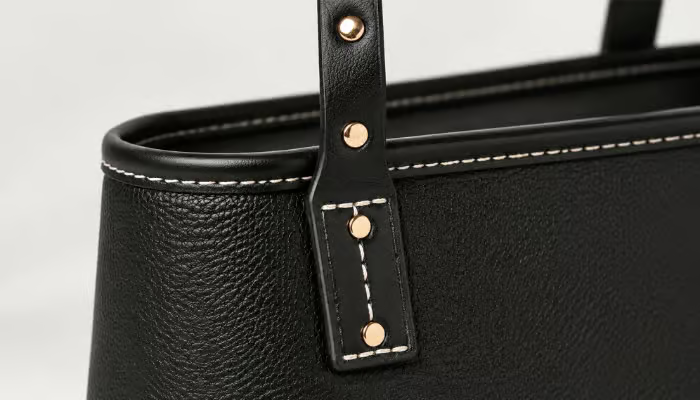
Rivets secure handle tabs to the bag body through pre-punched holes, creating a firm mechanical connection without stitching. They are commonly used with leather, PU, and thick webbing handles, particularly on structured bags where exposed metal fasteners can also serve as decorative details. Folded or reinforced handle ends provide a more substantial area for rivet attachment.
Rivet diameter and post length should match the handle and bag panel thickness. A backing washer helps distribute pressure around the hole, while an additional reinforcement patch strengthens the surrounding panel. Keep the holes far enough from the panel edges to prevent tearing when the handle is pulled under load.
Grommet and Eyelet Attachments
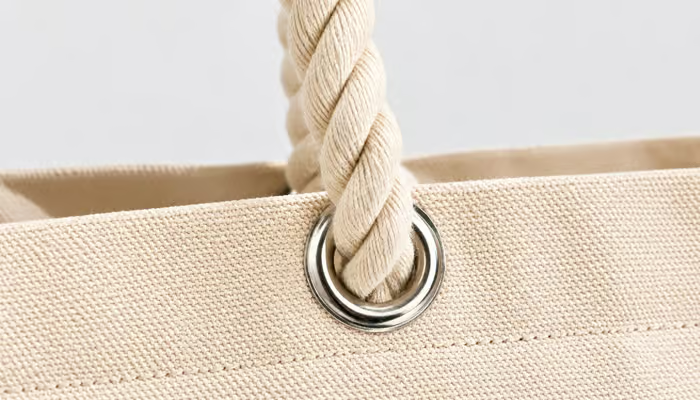
Grommets and eyelets reinforce openings in the bag body, allowing rope or cord handles to pass through without rubbing directly against exposed material edges. Eyelets generally have a simpler, lighter ring structure, while grommets often feature a more substantial construction and may include a backing washer. However, these terms can overlap between hardware suppliers, so check the actual fitting structure and specifications rather than relying on the name alone.
The fitting’s inner diameter should accommodate the cord without excessive movement, while its barrel length must match the combined thickness of the bag panel and reinforcement layer. Although the metal fitting protects the opening edge, it does not automatically strengthen the surrounding bag panel. For bags carrying heavier contents, an additional fabric or reinforcement patch helps distribute pulling forces and reduces the risk of tearing around the opening.
Metal Hardware for Detachable Bag Handles
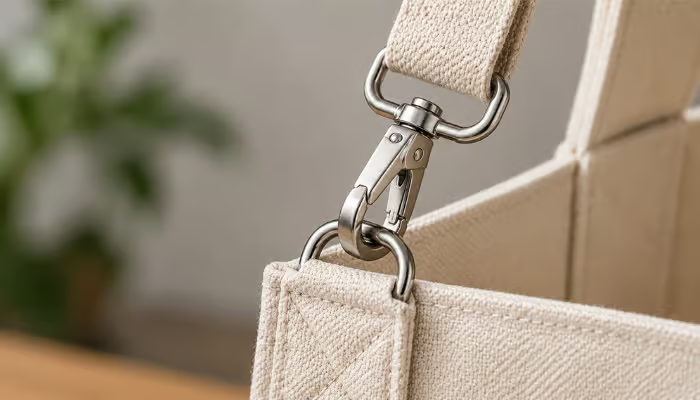
Metal hardware allows you to attach, remove, or replace bag handles and shoulder straps. A common setup uses D-rings fixed to reinforced tabs on the bag body and hooks attached to the strap ends. The hooks clip onto the rings to create a detachable connection. When selecting hardware, consider the opening dimensions, strap thickness, connection strength, and material finish.
Common metal hardware options include:
- D-Rings: These D-shaped metal loops provide fixed attachment points on the bag. You can secure them using sewn tabs or riveted fittings. Their inner width determines which hooks or straps can pass through, making size compatibility important when designing detachable handles.
- Swivel Hooks: A rotating joint allows the hook to turn without twisting the entire strap. The spring-loaded gate makes attachment and removal convenient, particularly for detachable shoulder straps and adjustable bag designs.
- Spring Clips and Snap Hooks: These fittings use a spring-loaded gate that opens when pressed and closes after release. Fixed versions lack the rotating joint found in swivel hooks, making them suitable for straightforward strap connections.
The appearance and durability of bag hardware depend on both its base metal and surface finish. Common materials include zinc alloy, stainless steel, and brass, while finishes such as nickel plating, chrome plating, antique brass, and matte black offer different visual effects and levels of wear and corrosion resistance. Consider both when selecting hardware to match your bag design and intended use.
- Zinc Alloy: Commonly used for decorative bag hardware, offering flexibility in shape and finish options.
- Stainless Steel: Provides good corrosion resistance, making it suitable for bags exposed to moisture or frequent outdoor use.
- Brass: Offers a distinctive warm metallic appearance and works well with premium or vintage-style bag designs.
Choosing the Right Bag Handles for Different Applications
Different bag applications call for different handle designs. Your choice should account for the bag’s construction, the weight of its contents, and how customers will carry it. The following table provides practical handle recommendations and key points to consider when specifying handles for different bag types.
| Bag Application | Handle Structure | Suitable Materials | Key Considerations |
| Gift and Boutique Bags | Twisted paper cords, cotton rope, satin ribbon | Paper, cotton, polyester satin | Appearance, ribbon width, light-load capacity |
| Retail Shopping Bags | Flat folded paper handles, twisted paper cords, sewn flat handles | Kraft paper, cotton, PP, polyester | Carrying style, handle drop, attachment strength |
| Grocery and Market Bags | Wide webbing, self-fabric handles | Cotton, polyester, PP woven | Carrying style, handle drop, attachment strength |
| Takeaway Bags | Flat folded paper handles, twisted paper cords | Kraft paper | Paper strength, bonding area, handle reinforcement |
| Promotional and Event Bags | Self-fabric handles, webbing handles, die-cut handles | Non-woven PP, PP woven, cotton, polyester | Unit cost, production efficiency, logo placement |
| Corporate Gift and Welcome-Kit Bags | Cotton rope, webbing handles, self-fabric handles | Cotton, canvas, non-woven PP, polyester | Gift weight, handle dimensions, appearance |
| Beach and Leisure Bags | Wide flat handles, cotton rope handles | Cotton canvas, polyester | Shoulder clearance, grip comfort, abrasion resistance |
| Wine and Bottle Bags | Twisted paper cords, rope handles, reinforced die-cut handles | Kraft paper, cotton, polyester | Bottle weight, attachment strength, opening reinforcement |
What Determines Bag Handle Strength?

A bag’s carrying capacity depends on the strength of its handles, the security of their attachments, and the ability of the bag body to withstand pulling forces. A strong handle can still fail if its attachment is weak or the surrounding material tears. The following factors determine how well the complete bag handles carrying loads:
- Handle Material and Construction: Fiber strength, material thickness, and weave density affect a handle’s tensile strength and elongation. You can use ISO 13934-1 to measure the maximum force and elongation of woven textile fabrics. For rope handles, strand construction and core structure also influence load capacity. Greater width improves grip comfort but does not necessarily mean higher tensile strength.
- Attachment Strength: Stitch pattern, stitch density, and sewn attachment length affect the strength of fabric handle connections. Paper handles rely on adhesive compatibility and bonding area, while riveted handles require correctly sized fasteners and backing support.
- Bag Body Reinforcement: The area around handle attachments must withstand transferred pulling forces. Fabric bags may require reinforced stitching or additional fabric patches, while paper bags need adequate paper strength, folded top edges, and sufficiently sized reinforcement patches to prevent tearing.
- Load Distribution: Handle positioning and attachment spacing affect how forces transfer to the bag body. Unevenly distributed contents can place greater tension on one handle or attachment point, increasing the risk of localized failure.
- Complete Bag Testing: Test the finished bag under its intended carrying load rather than evaluating the handle material alone. Check for excessive stretching, loose stitching, adhesive separation, panel tearing, and hardware deformation. Repeated lifting can also reveal weaknesses in reusable bags.
Factors Affecting Bag Handle Production and Packing Costs
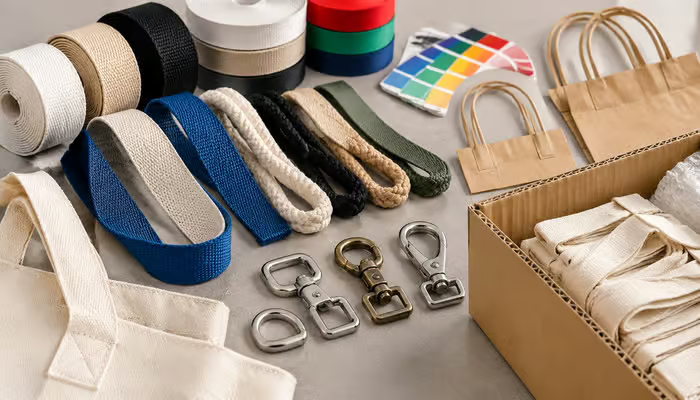
Bag handle specifications influence material consumption, manufacturing processes, customization expenses, and packing efficiency. Understanding these factors helps you compare different handle designs and control the overall cost of bulk bag orders.
- Material Consumption: Handle length, width, thickness, and material type determine raw material usage. Longer straps, wider webbing, and thicker ropes generally require more material, increasing the unit cost.
- Manufacturing and Attachment: Different handle constructions involve different production steps. Sewn webbing requires cutting and stitching, while paper handles need adhesive bonding and reinforcement. Braided ropes and detachable metal hardware may require additional processing or assembly.
- Customization and Finishes: Custom colors, printed ribbons, branded details, and specially shaped metal hardware may involve additional color matching, setup, or tooling costs. These expenses can have a greater impact on unit pricing for smaller orders.
- Folding and Carton Packing: Flat webbing and paper handles can usually lie against the bag body for easier stacking. Thick ropes, padded tubular handles, and protruding metal hardware may increase packed thickness or require extra protection, affecting carton capacity and shipping costs.
Custom Bag Handle Specifications to Confirm Before Bulk Ordering
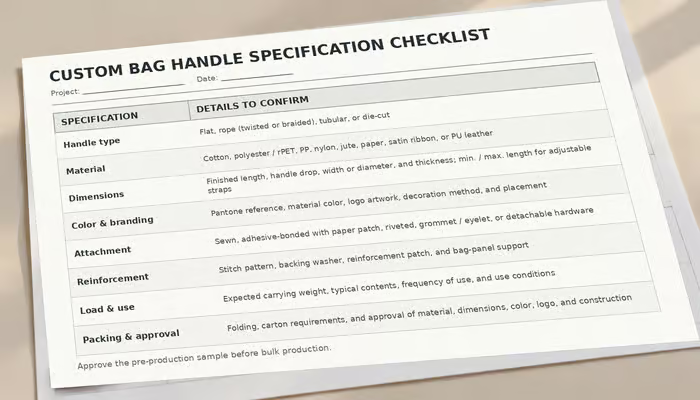
Before bulk production, confirm the key handle specifications with us. Clear requirements help us select suitable materials, finalize the construction, and ensure the finished handles match your bag design and intended use.
- Handle Type and Construction: Specify your preferred style, such as flat, rope, tubular, or die-cut. For rope handles, confirm twisted or braided construction. Paper handles can use flat folded or twisted paper cords.
- Material and Thickness: Confirm the material and relevant specifications, including fiber type, webbing width, thickness, and weave density. For rope handles, specify diameter and core structure; for paper handles, confirm paper grade and finish.
- Dimensions and Positioning: Provide the finished handle length, drop, and width or diameter. Also specify attachment spacing and distance from the bag edges. For adjustable straps, confirm minimum and maximum lengths.
- Color and Logo Decoration: Provide Pantone references or color samples, logo artwork, preferred printing method, and placement requirements. Specify additional finishes such as foil stamping or embossing if needed.
- Attachment and Reinforcement: Specify your preferred attachment method, such as stitching, adhesive bonding, rivets, or metal hardware. We can recommend suitable reinforcement structures based on the handle material and bag construction.
- Load Requirements and Durability: Tell us the expected carrying weight, typical contents, and frequency of use. We can recommend suitable handle materials, attachment structures, and reinforcement based on these requirements.
- Packing and Shipping Requirements: Let us know your preferred folding, packing, and carton requirements. Thick rope handles and metal hardware may affect stacking space and carton dimensions, so confirm these details before bulk production.
- Sample Approval: Review the pre-production sample‘s dimensions, materials, colors, logo placement, and attachment construction. Once you approve the sample, we use it as the reference for bulk production.
Conclusion
Your choice of bag handles should match the bag’s material, size, and intended use. Handle construction, dimensions, and attachment methods all affect carrying comfort, load support, and the overall bag design. Confirming these details before sampling helps ensure the finished product meets your requirements and reduces unnecessary adjustments during bulk production.
At Gentle Packing, we manufacture complete custom bags, including paper bags, reusable bags, and promotional bags. You can customize bag materials, sizes, structures, logo printing, and handle options to suit your products and branding needs. Share your design and requirements with us, and we’ll support your project from sample development to bulk production.
FAQs
1. What are the most common types of bag handles?
Common bag handle types include flat handles, rope handles, tubular handles, and die-cut handles. Paper bags also commonly use flat folded paper handles and twisted paper cords.
2. What is the best material for reusable bag handles?
The best material depends on your bag’s intended use and carrying requirements. Cotton offers a soft grip, polyester provides good abrasion resistance, PP is lightweight and economical, nylon offers flexibility, and jute provides a natural texture.
3. How long should tote bag handles be?
For standard shoulder-carry tote bags, a finished handle length of 22–26 inches (56–66 cm) and a drop of 9–11 inches (23–28 cm) provide a useful starting point. Shorter handles suit hand carrying, while longer handles offer more shoulder clearance. Adjust the dimensions according to the bag size and desired carrying position.
4. What is the difference between handle length and handle drop?
Handle length measures the distance along the handle between its two attachment points. Handle drop measures the vertical distance from the bag’s top edge to the highest inside point of the handle.
5. What handle width is best for carrying heavier items?
Flat handles around 1–1.5 inches (25–38 mm) wide provide a broader contact area for carrying heavier bags. Material strength, stitching, and attachment reinforcement also affect load capacity.
6. Which attachment method is best for custom bag handles?
Sewn attachments suit fabric handles, while adhesive bonding is common for paper bag handles. Rivets, grommets, and metal hardware provide additional options depending on the handle design and bag construction.
7. Can bag handles be customized in different colors, materials, and sizes?
Yes. You can customize handle materials, colors, lengths, widths, and attachment methods. Options include cotton, polyester, PP webbing, paper cords, jute rope, and satin ribbon.
8. How can I prevent reusable bag handles from tearing?
Choose suitable handle materials, reinforce the attachment points, and match the construction to the expected carrying weight. Box stitching, box-X stitching, and reinforcement patches can help reduce the risk of handles pulling away from the bag body.
Pingback: iphone duo release date