


For apparel brands selling online, packaging has to protect clothing through storage, packing, and parcel delivery while keeping the order easy to handle. Poorly matched packaging can leave garments too loose, over-compressed, or surrounded by unnecessary materials that add cost and packing work.
This guide explains how to build an apparel e-commerce packaging system around inner bags, mailers, boxes, tissue paper, labels, and printed inserts. You will also see how garment size, shipping conditions, branding needs, fulfillment efficiency, and sustainability affect each packaging choice.
The Core Components of Apparel E-commerce Packaging
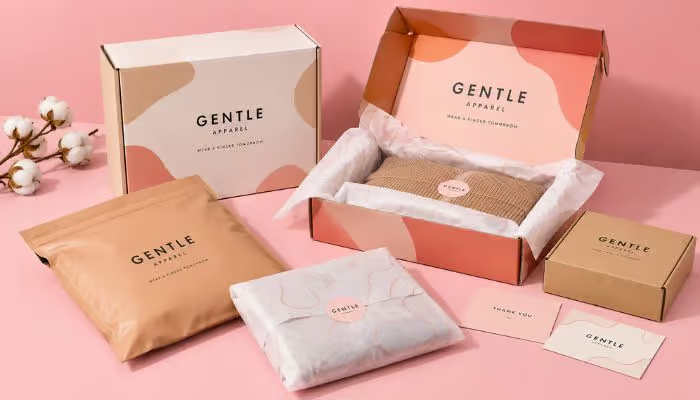
An apparel e-commerce packaging system usually combines inner product packaging, outer shipping packaging, and supporting components for presentation, identification, and customer communication. Each layer serves a different purpose, so brands should avoid adding materials that do not improve protection, fulfillment, or the delivery experience.
- Inner Packaging: Keeps individual garments contained, clean, and separated before shipping.
- Outer Shipping Packaging: Protects the complete apparel order during parcel handling and delivery.
- Tissue Paper: Adds wrapping, separation, and presentation inside clothing packaging without serving as the main protective layer.
- Labels and Stickers: Support product identification, branding, sealing, and handling needs in apparel packaging.
- Printed Inserts: Add care instructions, return information, promotions, or brand messaging to different forms of e-commerce packaging.
Inner Bag Options for Apparel Products
Inner packaging keeps individual garments clean, contained, and easier to handle before they enter the final shipping package. The right option depends on garment type, moisture exposure, presentation needs, storage conditions, and whether the bag is intended for reuse. The inner bag should protect the product without adding unnecessary material, thickness, or handling steps.
Glassine Bags

Glassine bags suit apparel brands that want a paper-based inner packaging option with a smooth, semi-transparent surface. Their dense paper structure gives them a cleaner finish than ordinary kraft paper and allows some product visibility without using clear plastic film. They work best with folded T-shirts, shirts, underwear, socks, scarves, and other relatively flat garments, especially when the brand wants the inner packaging to feel simple and paper-led.
Glassine bags commonly use open-top, adhesive-closure, or self-seal formats for different packing workflows. They mainly protect against dust, handling, and light surface contact but do not provide the same moisture barrier as polyethylene garment bags. Brands should consider warehouse humidity, parcel conditions, and outer packaging protection before replacing plastic inner packaging with glassine. They work best when the outer mailer or box already provides sufficient moisture and handling protection.
Clear Poly Garment Bags

Clear poly garment bags remain a practical option when apparel needs stronger moisture resistance, full product visibility, and simple handling during warehousing and fulfillment. These bags commonly use polyethylene or polypropylene films with self-seal or resealable closures for faster packing. The transparent surface helps warehouse teams confirm the garment, color, and size without opening the bag.
Poly garment bags come in different dimensions and film thicknesses to suit lightweight shirts, thicker knitwear, or multi-piece sets. Brands can also add ventilation holes, branding, barcodes, identification labels, or safety warnings where required. You should confirm local requirements before approving artwork. For example, New York State plastic bag warning requirements require a suffocation warning on certain thin plastic bags that meet specified size, opening, and thickness thresholds.
Fabric Dust Bags

Fabric dust bags give apparel e-commerce orders a reusable inner packaging option when garments need more presentation value, surface protection, or storage after delivery. The best fabric depends on garment type, product positioning, print requirements, durability, and whether customers are likely to reuse the bag beyond the initial shipment.
- Cotton: Suits premium apparel, knitwear, lingerie, and occasionwear where a softer hand feel and reusable storage value matter. It works well for drawstring bags with printed or embroidered branding.
- Polyester: Fits clothing packaging that needs better durability, wrinkle resistance, and repeated handling during fulfillment and reuse. It also works well with detailed printed graphics and branded designs.
- Non-Woven Fabric: Provides a more economical option for bulk apparel orders, seasonal campaigns, and routine garment protection where moderate structure and limited reuse are sufficient.
- Canvas: Works well for outerwear, knitwear sets, and heavier premium garments that need a thicker, more structured storage bag. Its extra weight and bulk make it better suited to higher-value orders than lightweight parcel shipping.
- Satin: Suits higher-value lingerie, silk garments, and occasionwear where a smooth surface helps reduce friction and improve presentation. Its higher cost makes it less practical for standard apparel shipments.
Outer Shipping Formats Used in Apparel E-commerce
Outer shipping packaging contains the complete apparel order and protects it throughout parcel delivery. Unlike inner bags, mailers and shipping boxes face compression, abrasion, moisture, and repeated handling in transit. Garment bulk, order size, protection needs, and structural support determine the most suitable outer format.
Poly Mailers

Poly mailers work well for soft, flexible garments in e-commerce shipping because they add little parcel weight or volume. T-shirts, leggings, activewear, lightweight knitwear, and other compressible apparel can usually fit into a mailer without adding much parcel weight or space. The plastic film also gives the package useful resistance to rain and incidental moisture during last-mile delivery.
Thickness, film construction, seal design, and bag size all affect shipping performance. Thin mailers may tear around zippers, buttons, or overfilled seams, while oversized bags allow garments to shift during transit. Opacity and puncture resistance also matter when contents need concealment or include harder garment details. FedEx notes in its polybag packaging guidelines that film thickness, dimensions, weight, and tear or puncture resistance affect performance. For returns, a second adhesive strip can make the same mailer easier to reseal and more practical for reverse logistics.
Paper Mailers

Paper mailers provide a paper-based shipping option for relatively flat apparel orders that need more structure than flexible plastic film. They suit folded shirts, underwear, accessories, and other lightweight products when the inner packaging already provides adequate protection. Gusseted or expandable formats can accommodate thicker garments and small multi-item orders without immediately moving to a shipping box.
Paper mailers require more attention to moisture, tearing, and closure performance during delivery. Paper grade, basis weight, seam construction, adhesive strength, and water-resistant treatments should match the shipping conditions. Paper-based formats can support recyclable packaging goals, but plastic liners, heavy coatings, or mixed-material structures may affect recyclability. Excessive garment bulk can also stress folds and seams, making a box more suitable.
Shipping Boxes

Shipping boxes provide greater structural protection than flexible mailers when apparel orders are bulky, multi-item, premium, or more sensitive to compression. Corrugated mailer boxes suit compact e-commerce apparel orders such as shirts, lightweight knitwear, and smaller sets. Standard shipping cartons are more appropriate for bulkier garments, mixed orders, and heavier packed loads. Both formats help resist compression and keep folded products more stable during parcel handling.
Material and structure should match the packed load. Single-wall corrugated board suits many lightweight apparel orders, while heavier shipments may need higher-strength grades or double-wall construction. Self-locking mailer boxes can improve presentation and simplify opening, while taped cartons remain practical for routine fulfillment and larger loads. For premium orders, the outer box can also protect inner presentation packaging from crushing, scuffing, and direct handling.
Supporting Packaging Components for Apparel Orders
Supporting components help apparel brands improve presentation, identification, and customer communication without changing the main protective structure of the package. Tissue paper, labels, stickers, and printed inserts should each serve a clear function. Brands should add them only when they improve presentation, identification, communication, or packing control rather than simply increasing the number of packaging layers.
Tissue Paper

Tissue paper provides a lightweight wrapping layer around folded garments or a liner inside mailers and boxes. Brands often use it to cover garments inside e-commerce boxes, separate multiple items, or create a more controlled opening sequence. It can also reduce direct surface contact between products, although it should not replace a protective inner bag when the garment needs moisture or contamination protection.
Tissue paper improves presentation without adding a rigid packaging layer. Custom printing can extend brand graphics inside the parcel, while plain or colored tissue creates a clean visual break between the garment and outer package. Paper softness, opacity, tear resistance, print method, and ink transfer risk affect the final result, especially when tissue contacts light-colored garments. It works best as a presentation and separation layer rather than the main source of protection.
Labels and Stickers

Labels and stickers support product identification, packaging control, and branding across apparel e-commerce orders. They can appear on inner bags, tissue paper, mailers, or product packaging depending on whether the information is intended for warehouse teams, customers, or shipping operations.
- Product Information Labels: Show garment size, color, style, or other product details needed for identification.
- Barcode and SKU Labels: Support scanning, inventory control, picking, and order verification across multi-SKU apparel orders.
- Branded Stickers: Add logos, collection names, or campaign graphics to tissue wraps, garment bags, mailers, or boxes.
- Sealing Stickers: Secure tissue paper, paper bags, sleeves, or other lightweight presentation packaging without adding a separate closure.
- Handling and Warning Labels: Carry warnings, handling instructions, or market- and retailer-specific markings where required.
Printed Inserts

Printed inserts carry information that does not need to remain attached to the garment or package. They are useful for post-purchase communication in e-commerce orders because brands can include instructions, service information, or promotional content without crowding product labels.
- Thank-You Cards: Add a short brand message or order acknowledgment.
- Garment Care Cards: Add washing, drying, ironing, or storage guidance that supplements the garment’s permanent care label.
- Return and Exchange Cards: Explain return steps, deadlines, or access to an online return portal.
- Promotional Inserts: Include discount codes, loyalty offers, referral information, or upcoming collection messages.
- QR Code Inserts: Link customers to care guides, sizing information, product registration, return pages, or other digital content while reducing the amount of printed information needed inside the package.
How to Choose Apparel E-commerce Packaging?
The right apparel e-commerce packaging should match the garment, shipping conditions, and desired presentation. Apparel brands should consider how the inner bag, outer package, and supporting materials work together. A lightweight T-shirt in a poly mailer has different needs from a structured jacket or premium knitwear set shipped in a box.

Folded Garment Size and Packaging Fit
Packaging dimensions should start from the garment after folding, not from the labeled clothing size. A size M T-shirt and a size M hoodie can have similar body measurements but very different packed volumes because fabric weight, folding method, trims, and garment structure change the folded thickness.
For initial packaging planning, brands can use folded garment dimensions as a practical reference. A single T-shirt may fold to around 250–300 × 300–350 mm, while shirts and lightweight knitwear often need about 280–330 × 330–400 mm. Hoodies, sweaters, and thicker garments may reach 320–400 × 380–480 mm before adding any packaging allowance. These ranges are starting points rather than fixed apparel packaging standards.
The inner bag should leave enough clearance for insertion and sealing without allowing the garment to move excessively. A common starting approach is to add roughly 20–40 mm to the folded width and length, then adjust for garment thickness, closure style, and fabric compression. Multi-item orders need more depth allowance, especially when folded garments stack rather than compress evenly. Brands should confirm the final dimensions with packed samples before approving bulk production.
Protection and Shipping Conditions
Specific storage and shipping risks determine the level of protection a garment needs. Moisture, compression, abrasion, contamination, and product movement each call for a different level or type of protection.
- Moisture Protection: Choose a clear poly inner bag when garments may face humid storage, rain exposure, or long parcel routes. Glassine can work for lighter protection, but it does not provide the same moisture barrier.
- Compression and Wrinkle Control: Use a corrugated shipping box for structured jackets, thick knitwear, or garments that should not be tightly compressed. Flexible mailers suit softer apparel that can tolerate folding and pressure.
- Abrasion and Surface Protection: Add tissue paper, a smooth inner bag, or a fabric dust bag when prints, embroidery, trims, or delicate surfaces could rub against other items.
- Dust and Contamination Protection: Sealed inner bags help keep apparel clean through warehousing and picking. This matters more for light-colored garments or products that may stay in storage before dispatch.
- Movement Control: Multi-item apparel orders benefit from separate inner bags, folded tissue between layers, or a closely fitted box when different garments or accessories could shift and press against each other during shipping.
Brand Presentation and Packaging Layers
Choose the number of packaging layers according to product value, presentation goals, and the protection already provided by the main package. If the garment is durable and shipping risks are limited, an inner bag plus a poly or paper mailer may be enough. Extra tissue, inserts, or presentation packaging should have a clear purpose because each additional component adds material and packing cost.
Premium apparel can justify a higher packaging budget when added layers support both protection and brand positioning. Delicate fabrics, higher-value garments, and gift-oriented orders may benefit from tissue paper, fabric dust bags, branded inserts, or a display box. The goal is not to maximize packaging layers, but to invest where added protection or presentation matches the product positioning and customer experience.
Best Packaging Setups for Different Apparel Types
Different apparel types need different packaging setups because garment structure, compression tolerance, surface sensitivity, and presentation requirements vary. Clothing packaging ideas should therefore match the product rather than follow one standard format.
| Apparel Type | Recommended Packaging Setup | Supporting Components | Main Consideration |
| T-Shirts and Lightweight Basics | Clear poly or glassine inner bag with a poly or paper mailer | SKU label, optional tissue or thank-you card | Minimize bulk for soft, compressible garments |
| Shirts and Dresses | Glassine or clear poly inner bag with a paper mailer or shipping box | Tissue wrap, branded sticker, care insert | Reduce creasing and fabric-to-packaging friction |
| Hoodies and Knitwear | Clear poly or fabric dust bag with an expandable mailer or corrugated box | Tissue, size label, care card | Accommodate thickness without over-compression |
| Jackets and Outerwear | Clear poly or fabric dust bag inside a corrugated shipping box | Tissue, branded label, care insert | Preserve structure around shoulders, collars, and padding |
| Hats and Caps | Protective inner wrap or bag inside a rigid mailer or corrugated box | Tissue, shape support, branded sticker | Prevent crown collapse and brim bending |
| Underwear and Lingerie | Clear poly or glassine inner bag with a paper mailer or small shipping box | Size label, care or return insert | Avoid snagging and over-compression |
How Does Packaging Affect Apparel Fulfillment Efficiency?
Packaging affects apparel fulfillment through several linked stages rather than one isolated packing task. Packaging structure, component count, storage format, parcel profile, and closure design can all affect e-commerce fulfillment efficiency by changing how quickly materials move through the warehouse, how consistently orders are packed, how much transport capacity each shipment uses, and how easily returns can be processed.

Packing Complexity and Labor
Packing complexity depends on how many manual actions each order requires. A self-seal poly mailer may only need product insertion and closure, while tissue wrapping, stickers, inserts, box assembly, and tape sealing add touchpoints and a greater chance of rework. As packing time per order rises, fewer apparel orders can move through the packing station in the same period, directly reducing throughput. Standardized folds, pre-applied closures, and fewer loose components help maintain steadier output.
Packaging Storage and Inventory
Flat poly mailers and glassine bags take up relatively little storage space, while corrugated cartons, fabric dust bags, and presentation packaging require more room and separate stock locations. More packaging sizes and formats also increase replenishment tasks and the chance of selecting the wrong material. Time spent locating stock, waiting for replenishment, or correcting mismatches interrupts material flow and reduces the number of orders a packing area can process continuously.
Shipping Weight and Parcel Volume
Flexible mailers conform closely to compressible garments, while corrugated boxes add fixed external dimensions and more material. Presentation boxes placed inside shipping cartons increase weight and volume further, and unused space can raise dimensional weight. Heavier or bulkier parcels consume more cart, pallet, and vehicle capacity, reducing parcel density and increasing handling demand and shipping cost per order.
Returns and Repacking Efficiency
Closure design also affects e-commerce returns, since apparel often needs inspection, refolding, relabeling, and restocking. Resealable inner bags, double-adhesive-strip mailers, and reclosable boxes give customers a usable return package and help keep garments contained in transit. Poorly reusable packaging can lead to loose products, damaged presentation, or extra repacking work. When returns arrive contained and identifiable, fewer corrective steps are needed, shortening processing time and returning sellable inventory to stock sooner.
Sustainable Packaging Considerations for Apparel E-commerce

Sustainable clothing packaging works best when brands assess the full packaging system rather than simply replacing one material with another. Reducing unnecessary layers, avoiding oversized mailers or boxes, and matching the package closely to the garment can lower both material use and parcel volume before any material substitution takes place. Recycled-content poly bags, recyclable paper mailers, reusable fabric bags, and FSC-certified paper products can support different sustainability goals when they fit the product and intended end-of-life route.
Material claims should also reflect how the finished package will actually be used and discarded. Plastic liners, heavy coatings, mixed-material laminations, and decorative components can reduce recyclability, while even recyclable materials offer limited benefit where suitable collection systems are unavailable. The FTC Green Guides also stress that environmental claims should be clear and properly qualified. A stronger sustainable packaging strategy reduces material and transport volume while preserving product protection and practical recycling or reuse.
Conclusion
Effective apparel e-commerce packaging should protect garments without adding unnecessary material, handling steps, or shipping volume. The right combination of inner bags, mailers or boxes, tissue, labels, and inserts depends on the garment, fulfillment process, delivery conditions, and desired customer experience. Standardizing suitable formats across similar apparel SKUs can also simplify packing and inventory while keeping protection consistent.
Gentle Packing supports custom apparel packaging in different materials, sizes, structures, and printing options for bulk production. Share your garment type, folded dimensions, preferred packaging format, and order requirements to develop a packaging setup that fits both the product and fulfillment process.
FAQs
1. What is the best packaging for shipping clothes?
The best option depends on garment type, folded volume, protection needs, and shipping conditions. Soft apparel often works well in poly or paper mailers, while bulky, structured, or presentation-sensitive garments usually benefit from corrugated boxes. Inner bags can add dust, moisture, or surface protection.
2. Do clothes need an inner bag before shipping?
Not every apparel order needs the same inner packaging. Inner bags are most useful for protection from dust, moisture, repeated handling, or contact with other products. Clear poly, glassine, and fabric dust bags suit different protection, presentation, and reuse needs.
3. Are poly mailers or boxes better for apparel?
Poly mailers suit soft garments that tolerate folding and light compression, while boxes provide more structural protection. T-shirts and lightweight knitwear often fit mailers well, whereas jackets, heavy sweaters, gift sets, and structured apparel usually need a corrugated box.
4. How do I choose the right mailer size for clothing?
Start with the garment after folding, not the labeled size. Measure folded length, width, and thickness, then add enough clearance for insertion and sealing. The mailer should limit movement without over-compressing the garment or stressing the closure.
5. Is tissue paper necessary for e-commerce clothing packaging?
No. Tissue paper mainly supports presentation, separation, and light surface protection. It is useful for a more controlled opening experience or separating garments, but it should not replace an inner bag when moisture or contamination protection is needed.
6. How can apparel brands reduce packaging without sacrificing protection?
Remove layers that do not serve a clear protective, operational, or communication purpose. Right-size mailers and boxes, standardize packaging across similar SKUs, and combine printed information where possible. The remaining packaging should still control moisture, compression, contamination, and movement.
7. What information should I provide when ordering custom apparel packaging?
Provide garment type, folded dimensions, inner and outer packaging needs, materials, print requirements, SKU breakdown, and order quantity. Also confirm closure style, labeling, shipping destination, and sample needs so the manufacturer can prepare more accurate samples, pricing, and production recommendations.
